Get Full Government Meeting Transcripts, Videos, & Alerts Forever!
Get email alerts on the Measure O topic
No spam. Unsubscribe anytime.
Board approves quarterly oversight for Measure O committee and joins owner‑controlled insurance JPA
Summary
After the district closed escrow on about $40 million in bond proceeds, the board amended Measure O oversight bylaws to require at least quarterly CBOC meetings during busy construction periods and voted to join a statewide owner‑controlled insurance JPA (SOAP) to protect Measure O projects.
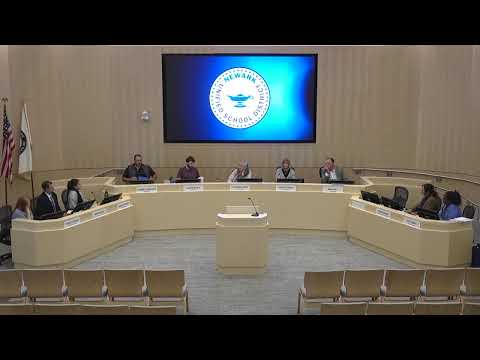
The Newark Unified School District board on Aug. 5 amended the citizens’ bond oversight committee bylaws for Measure O and voted to join a statewide owner‑controlled insurance program for district construction projects.
Legal counsel Katie Dobson told trustees the district’s bond issuance closed that morning and that the sale produced better-than-expected results: the district’s payment estimate fell by more than $4 million and interest costs were lower than earlier projections. Trustees said that given the roughly $40 million now available for Measure O projects, the oversight committee should meet more often than the legal minimum of once a year.
After discussion, the board approved an amendment (moved by Member Hill) to set the committee’s minimum meeting frequency to quarterly when construction activity is high and to revisit the number at the organizational meeting each year. Trustee comments emphasized quarterly oversight early in construction to ensure transparency and fiscal control.
On a related risk‑management decision, the board also voted to join the Statewide Owner‑Controlled Insurance Program (SOAP) — a joint‑powers program managed by Keenan and Associates — that provides bundled construction insurance (general liability, workers’ compensation, owners’ protective professional liability, pollution and builder’s risk) and a loss‑control administration intended to reduce litigation and claims on public construction projects. Keenan’s representative said SOAP’s typical fee is in the low single digits (about 3.11% of construction value in the prior phase) and that the program can offer larger limits than typical project‑level insurance and a 10‑year completed‑operations coverage on enrolled projects.
Board members and staff said joining SOAP is prudent because it can reduce claims complexity and provide monthly site loss‑control checks as Measure O projects move into design and construction. The decision to join the JPA was taken as an enabling action; the board will decide on a project‑by‑project basis whether to enroll individual Measure O contracts in SOAP.
Next steps: staff will publish amended committee bylaws and present a proposed annual meeting schedule at the organizational meeting; for each Measure O project staff will return with a recommendation on whether to enroll that project in SOAP.