Get Full Government Meeting Transcripts, Videos, & Alerts Forever!
Get email alerts on the Rezoning topic
No spam. Unsubscribe anytime.
Planning commission denies rezoning request for Highway 1032 parcel over spot‑zoning concerns
Summary
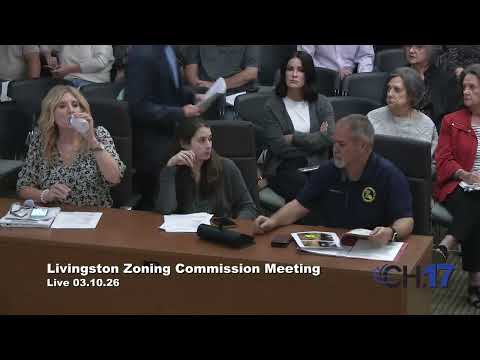
The Livingston Parish Zoning and Planning Commission on March 10 denied a request by property owner Chris Connorly to rezone a three‑acre tract along LA Highway 1032 from agricultural to R2 for three single‑family lots, citing wetland limits but ultimately rejecting the change over precedent and spot‑zoning concerns (vote 5‑1).
The Livingston Parish Zoning and Planning Commission voted 5‑1 on March 10 to deny a rezoning request from A to R2 for a three‑acre tract on Louisiana Highway 1032, concluding the narrow, frontage‑only proposal posed spot‑zoning and precedent concerns despite federal wetlands that limit development.
Owner Chris Connorly told the commission he seeks to create three single‑family residential lots each about 16,000 square feet along the highway frontage so he can provide future homes for his children. “My intent is very simple. I would like to create three single family residential lots along the highway frontage,” Connorly said, and he described a Army Corps‑documented wetlands delineation that confines developable land to roughly 1.1 acres of high ground.
The commission pressed Connorly on alternatives and the map’s implications. Commissioners repeatedly raised the risk that approving an R2 pocket amid largely agricultural or R1 surroundings could be read as a precedent for similar conversions; some members suggested a rezoning to R1 or a different split zone would better align with the master‑plan guidance. Commissioners noted the parcel’s deed restrictions limit the property to single‑family homes, and Connorly emphasized the request’s small scale and the wetlands constraint, saying the remainder of the tract would remain undeveloped wetlands.
After discussion the commission put a motion to deny the rezoning. Roll‑call voting produced five votes to deny (Mr. Clemens, Mr. Wax, Mr. Dana, Miss Ferris, Miss Long) and one opposed (Mr. Burns), so the owner’s request failed and will not proceed to the council. The commission did not identify a specific mitigation or modification required to win support; members suggested a narrower request (such as an R1 frontage split or waiting for federal jurisdictional changes) would be more likely to succeed.
The hearing record includes the applicant’s exhibits showing the wetlands delineation, a preliminary resubdivision sketch for the three frontage lots, and recorded deed restrictions restricting multifamily development. The denial leaves the parcel in its existing agricultural designation; the applicant may return with a revised application or pursue other remedies noted by commissioners.
The commission moved on to other zoning items following the vote; this decision ends the commission’s action on case 26‑21 for now.