Get Full Government Meeting Transcripts, Videos, & Alerts Forever!
Get email alerts on the Infrastructure topic
No spam. Unsubscribe anytime.
Belmar lays out 10-year infrastructure plan; targets townwide lead-service-line replacements
Summary
At a September workshop the Belmar council reviewed completed and planned water, sewer and road projects, highlighted inflow-and-infiltration problems driving higher sewer charges, and said the borough will seek IBank funding to phase lead-service-line replacements—coordinated with paving projects through 2031.
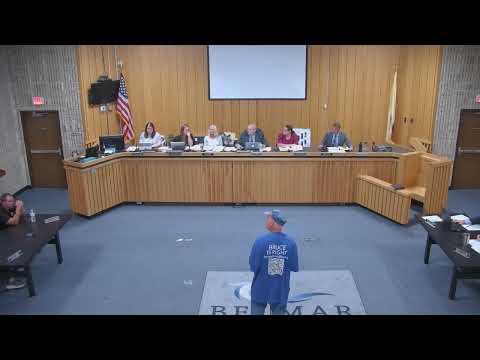
Belmar officials presented a 10-year infrastructure plan at a council workshop on Sept. 23, detailing recent upgrades, active work and a prioritized schedule of repairs and replacements for roads, water mains and sanitary sewers.
The presenter said the borough has not had major sanitary-sewer upgrades since 2011 and described inflow-and-infiltration (INI) events that sharply raise flows to the regional treatment plant and increase the town’s charges. "When that line gets backed up, it backs up everything else down the line," the presenter said, noting a significant May 2018 storm produced a spike in flow to the Mammoth Regional Sewer Authority.
Why it matters: high INI increases operating costs that are passed to the borough, making investments in sewer piping and storm controls both a public-health and budgetary priority. The borough’s stated mission is to make infrastructure "strong, resilient, and accessible for all," and the engineering inventory maps were described as a tool to prioritize work so pipe repairs precede repaving.
Key projects and timing: Active projects include sanitary, storm, water and paving work on Fifth Avenue and Maine to Sea Street (funded by a 2023 NJDOT grant) and 14th Avenue between B Street and Ocean A (2024 DOT grant). Officials identified a major trunk replacement from Eighth to Main (the main sewer line feeding the southern system) with sewer lining and water-main work to precede paving; paving for that corridor is targeted for about 2027. Longer-range items listed on the plan include South Lake Drive (target fall 2026), multiple avenue corridors and additional Fifth Avenue phases through 2029–2031.
Lead and galvanized service lines: The presenter and borough engineer said many service connections are old—cast-iron, galvanized or lead—and must be addressed. Map symbols shown to the public indicated black dots for lead and green for galvanized lines; residents were told state requirements call for replacement by 2031. Jim Morris, borough engineer, said the borough plans to apply to the State Infrastructure Bank (IBank) for townwide lead-service-line replacement that would be phased over years and coordinated with road projects. Where IBank or IVAC funding (principal forgiveness) is available, Morris said replacement work "would be done at no cost to the homeowner." Where projects are not IBank-funded, the property owner remains responsible for the service from the main to the house under borough ordinance, while the borough will replace lines to the curb when it reconstructs the street.
Public concerns and utility limits: Residents urged burying electric and communications wires to restore the tree canopy and reduce trimming; the council and presenter said the borough lacks authority to require utilities (e.g., JCPL or cable providers) to underground lines and recommended outreach to state legislators or the utilities themselves. Residents also raised aesthetics and safety concerns about dangling or looped cable wires along Route 35.
Other updates: Officials announced a Main Street Bridge closure planned by the State from Oct. 14, 2025, to Feb. 27, 2026, with a goal to reopen by the St. Patrick’s Day parade. Council members noted a $1.5 million grant for a boardwalk restroom at 16th Avenue and ongoing work on railings and a year-round restroom at Taylor Pavilion.
What's next: The borough will pursue IBank and other grant opportunities, phase lead-service-line work with roadway projects, and revisit the prioritized list annually so the capital plan can be adjusted as funding and conditions change.