Get Full Government Meeting Transcripts, Videos, & Alerts Forever!
Get email alerts on the Planning Rules Regulations topic
No spam. Unsubscribe anytime.
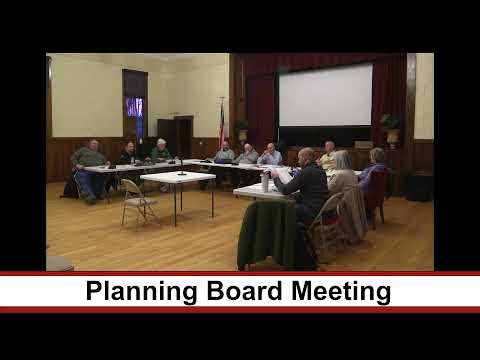
Swansea planners debate revisions to site-plan rules, add one-year expiration language
Summary
The Planning Board spent substantial time revising site-plan review regulations, proposing a one-year expiration for approvals 'unless active and substantial development has occurred,' discussing examples of qualifying work and agreeing staff will redraft language for public hearing.
At its March 12 meeting the Swansea Planning Board conducted a line-by-line review of proposed edits to the town's site-plan review regulations, focusing on the placement of approval and conditional-approval language and on a proposed one-year expiration for approvals unless "active and substantial development" occurs.
Planning staff and board members debated where the approval/conditional-approval language should live in the document and how to phrase expiration so it does not imply automatic termination of an approval. Members referenced state statutory language (RSA 676:4) when aligning definitions and structure. The board discussed adding an "unless" clause so that approvals would expire after one year "unless active and substantial development has occurred," and worked through concrete examples that could satisfy that threshold.
Examples discussed by the board as qualifying for "active and substantial development" included site-preparation activities (excavation, clearing, installation of erosion controls), construction of foundations or slabs, and installation of basic infrastructure such as drainage or utilities. Members considered but rejected a fixed numeric threshold in favor of a discretionary, case-by-case approach. The board also discussed rules for phased approvals, bonding and the timing and form of compliance hearings; one provision under discussion would require a public compliance hearing within one year after approval for certain conditions, otherwise approval could be null and void.
Members debated terminology (some noted "compliance" is not used in RSA language) but agreed the regulations should provide practical tools — including a one-year extension on showing necessity and a planning-board discretion to waive or extend deadlines for good cause. Planning staff (Adam) will prepare the revised text for the board and the edits will be noticed for a public hearing at a future meeting (members suggested April 9).
The revisions seek to clarify administrative and conditional approvals, give the town enforceable timing milestones for implementation and preserve planning-board flexibility for extensions or waivers.