Get Full Government Meeting Transcripts, Videos, & Alerts Forever!
Get email alerts on the Agriculture Research Education topic
No spam. Unsubscribe anytime.
Southern University AgCenter outlines research, workforce and facility needs, seeks one‑time funding
Summary
Southern University AgCenter officials briefed the House committee on Oct. 3 about research priorities (precision nutrition, aquaculture, viticulture), student supports (JAGSTARS), and capital needs including a proposed 1,300‑bed mega shelter and a high‑tech meat‑processing facility; presenters requested one‑time funding and partnerships.
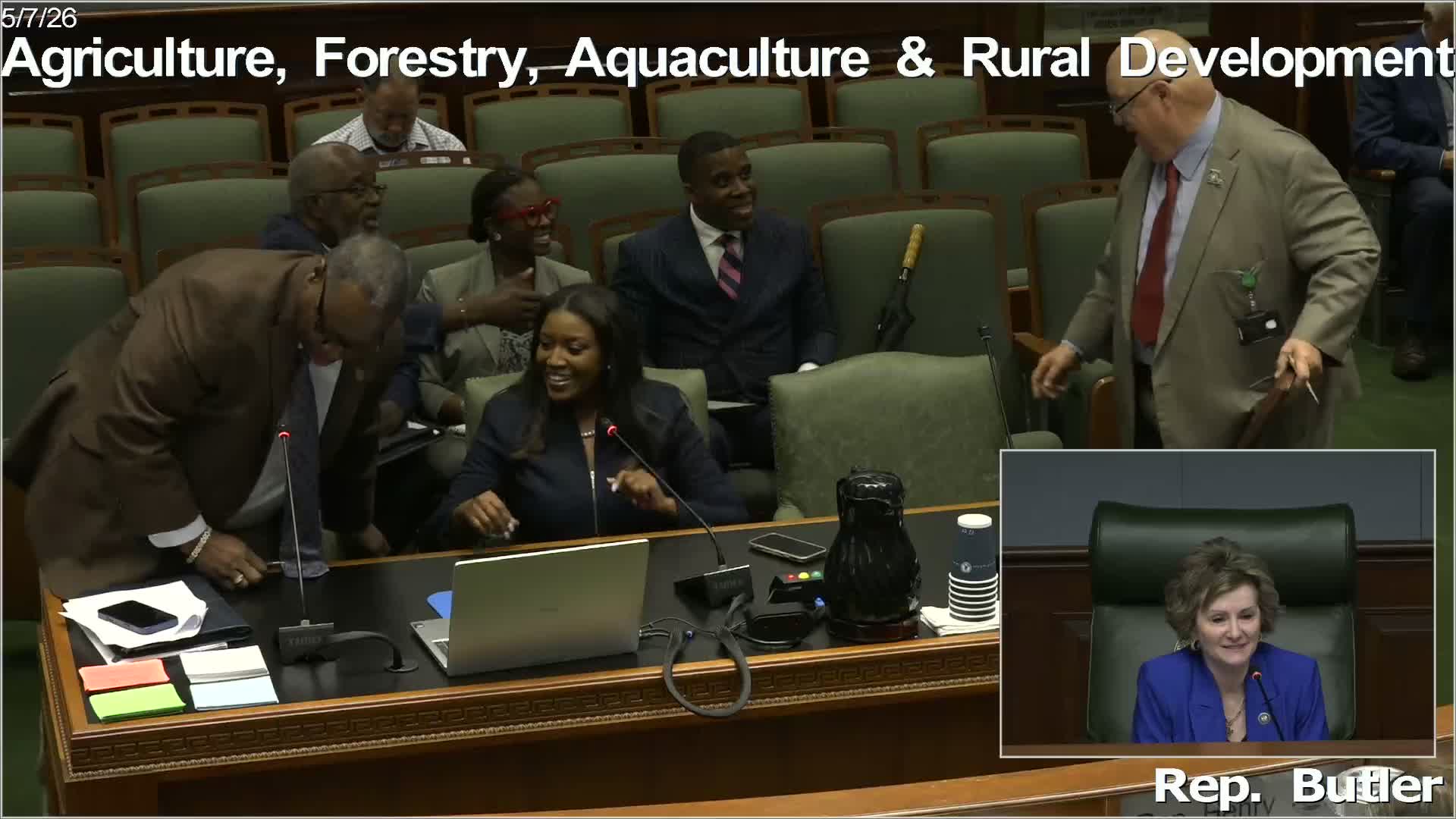
Officials from Southern University’s AgCenter presented to the House Committee on Agriculture, Forestry, Aquaculture and Rural Development on Oct. 3, outlining academic and extension priorities, research initiatives and capital projects and asking the committee to consider one‑time funding to support those efforts.
Orlando McMeans, who said he serves as interim president of the Southern University System and chancellor of the AgCenter, described the AgCenter’s tripartite mission — teaching, research and extension — and noted the center serves all 64 parishes. He highlighted recruitment and dual‑enrollment efforts, and said JAGSTARS scholarships (an AgCenter program) had seen funding restored after a prior cut. “We grow Jags,” McMeans said, stressing the AgCenter’s role preparing students for agriculture and allied careers.
McMeans and other presenters described research programs in precision nutrition, smart ranching (animal sensors and monitoring), aquaculture and a growing viticulture/enology program. He said USDA is fully funding a new 12‑acre vineyard and that the AgCenter is expanding food‑processing and bioprocessing capacity, including a proposed high‑tech meat‑processing facility to help farmers process and add value to local products.
Executive Vice Chancellor Calvin Reuben Walker described a proposed mega safe shelter at the experiment station intended to serve coastal parishes and provide surge capacity for disasters; Walker said the project’s funding picture included a reported $15 million from FEMA and a proposed $9.2 million state contribution. He told members the shelter could provide about 1,300 beds and would have regional utility in the event of large disasters.
Members asked about workforce training (butcher and meat‑cutting classes), cattle genetics, mobile processing units and program scale; presenters said training and a USDA‑funded mobile processing unit are part of plans but noted operational costs, CDL drivers and towing vehicles remain practical constraints.
Why it matters: The AgCenter connects research and students to farmers statewide, and the committee hearing gave lawmakers a forum to weigh requests for one‑time capital and program funding, and to understand infrastructure limits — cold storage, processing and training — related to the state’s agriculture supply chains.
What happens next: The AgCenter requested increased base funding and one‑time funds (the presentation included a request for a $5 million base push and other one‑time amounts); presenters said they will follow up with members and staff on specific budget figures and project timelines.