Get Full Government Meeting Transcripts, Videos, & Alerts Forever!
Get email alerts on the Transportation Cip topic
No spam. Unsubscribe anytime.
ODOT presents new 10-year CIP; Clackamas jurisdictions press for clearer pathways to smaller projects
Summary
ODOT staff presented a 10-year capital improvement program intended to identify about 200 investments and use a scoring system to prioritize projects across safety, state of good repair and other goals. County officials praised the clarity but pressed ODOT on rural paving, project nomination windows and how the R1 act process will allocate limited funds.
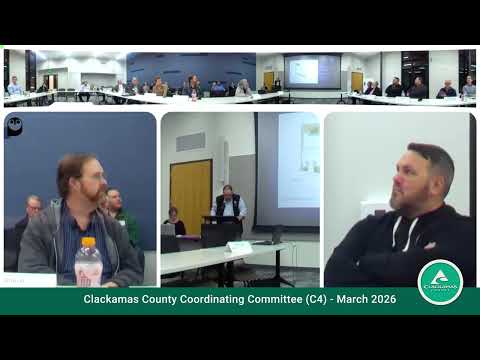
ODOT and regional leaders on the C4 panel on Thursday outlined a new capital improvement program (CIP) intended to create a 10-year portfolio of projects and a more transparent process for moving local projects into state funding programs.
"The capital investment plan will identify 200 investments over a 10‑year period," said Stephanie Miller, the staff presenter, who described a scoring approach that weights safety, state-of-good-repair and other goals and routes top-ranked projects to a Project Selection Advisory Committee for harmonization across jurisdictions.
Why it matters: local elected officials said the change could help smaller cities that lack staff capacity to advance projects, but they also pressed ODOT on whether the new process will alter long-standing patterns of limited paving and maintenance on state highways that pass through small cities.
Miller said the intent is to produce a more predictable pipeline and to use asset-management data (pavement condition, bridges, culverts) and peer-state experience to produce realistic scopes and cost estimates before projects enter late-stage programming. "We're trying to get better estimates so when we start with a cost estimate we have a better sense what's current," she said.
County and city officials repeatedly raised equity concerns about the nomination window and geographic distribution of projects in the Region 1 (R1) process. Jamie, a county representative involved in the R1 discussions, said jurisdictions were invited to nominate projects and that an early February list produced a first set of top-five projects; she said the region later voted to cap additional applications, leaving only projects submitted by the original deadline plus ODOT's original candidates on the table.
Local examples underscored urgency. Officials flagged Highway 26 in the Rodendum area and the Sunnyside/Highway 212 intersection as high-crash locations deserving near-term work. "That intersection is failing and creating a dangerous situation," one county official said.
ODOT staff acknowledged statewide pavement needs but stressed funding constraints and program restrictions. Miller noted some funds can only be used for programmatic purposes, which affects how the statewide portfolio is balanced between big projects and smaller maintenance or safety investments.
What happens next: draft CIP materials are expected in the fall with public engagement; the CIP cycle is two years, which staff said will allow jurisdictions to periodically revisit priorities and move candidate projects through scoping, planning-level design and programming.