Get Full Government Meeting Transcripts, Videos, & Alerts Forever!
Get email alerts on the Land Use Solar topic
No spam. Unsubscribe anytime.
Zoning board delays Greenwood Road solar project vote, cites pending wetland delineation
Summary
McHenry County Zoning Board of Appeals continued a hearing on application Z26009 from 3A Energy LLC for a 2.4 MW commercial solar facility on ~9.906 acres along Green Road to April 15 after members and staff said a county wetland delineation must be reviewed; the motion passed 7–0.
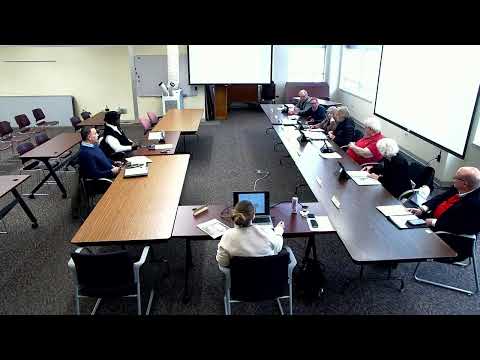
The McHenry County Zoning Board of Appeals voted 7–0 on March 2 to continue its hearing on application Z26009 — a request by 3A Energy LLC for a conditional‑use permit to build a commercial solar facility on about 9.906 acres on the south side of Green Road in Alden Township — to April 15 at 1:30 p.m., after board members and county staff said a pending wetland delineation could materially change the site layout.
The move came after the project’s contractor, Dr. Everton Walters, president of WCP Solar, presented the site plan and technical details of the proposal. Walters said the design calls for roughly 3,400 bifacial, fixed panels in an east–west orientation for an approximately 2.4‑megawatt system, overhead cabling to avoid trenching through wet areas, screening along lot lines and a decommissioning bond to return the property to its prior condition when the system is removed. He told the board the system would produce enough energy for roughly 500 households and that the project would generate about $12,000 in annual tax revenue (about $320,000 over the system’s lifetime).
Why the delay matters: board members and staff flagged uncertainty about how much of the parcel is jurisdictional wetland and whether proposed grading or pile‑driven racking would comply with county rules intended to minimize wetland impacts. A member cited the county’s zoning standard (referred to in the meeting as section 2E) directing applicants to locate arrays to minimize wetland disturbance. The county water resources engineer recommended delaying final action so staff could review the certified wetland delineation before the board votes.
Questions at the hearing focused on wetlands, grading, equipment siting and noise. Walters said the project avoids most wetland areas shown in county records and that piles used to support the racking are aluminum alloy and “do not leech or drain in any way,” a method he called minimally disruptive. Board members pressed whether pile driving still causes disturbance and whether a visible pond or depression on the property would be filled or graded; Walters said final grading would follow contractor recommendations and county stormwater requirements and that any wetland disturbance would be mitigated or permitted as required.
Noise and equipment placement drew scrutiny. Members asked where transformers and inverters would be sited; Walters pointed to the MV disconnect and said inverters would be placed at array edges or in a central cluster depending on the final inverter choice. He estimated inverter/transformer sound would be around 50 dB at 50 feet based on experience, while application materials included short‑range acoustical ratings (for example, a 73 dB rating at 3 feet in submitted specifications). Board members requested additional clarity on sound levels and noted that siting inverters farther from the public right‑of‑way could reduce community exposure.
Walters said the interconnection application to the utility had been submitted and that preliminary study costs for any reinforcement could range from about $50,000 to $250,000; he also said the project team would forward the wetland delineation to county staff as soon as it is completed. The applicant told the board the delineation had been commissioned and the consultant expected to complete the field work within days.
After discussion, a board member moved to continue the hearing pending receipt and review of the wetland delineation by staff; the motion was seconded and, after an amendment to set the next date, passed by roll call with seven votes in favor and none opposed. The board recorded the continuation date as April 15 at 1:30 p.m. in the same meeting room.
Next steps: county staff will review the wetland delineation and any revised site plans or mitigation proposals before the board reconvenes. The continuation means the ZBA will not take a final vote on the conditional‑use permit at the March meeting.