Get Full Government Meeting Transcripts, Videos, & Alerts Forever!
Get email alerts on the Sewer Permit topic
No spam. Unsubscribe anytime.
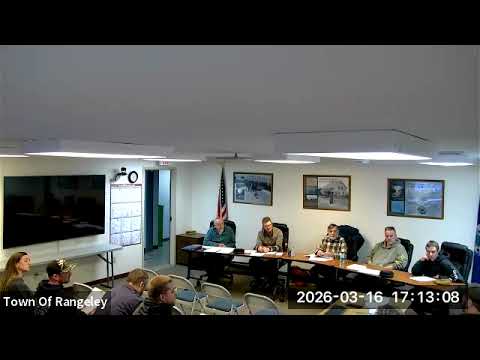
Rangeley sewer commission approves permit for pressure‑washing shop with 10‑car daily limit
Summary
The Rangeley Sewer Commission approved a permit for an on‑site bathroom and a pressure‑washing/undercoating business at 2745 Main Street, conditioning approval on a maintenance plan and a limit of no more than 10 cars per day; commissioners also waived a one‑time connection fee for this instance.
The Rangeley Sewer Commission on a voice vote approved a permit for an on‑site bathroom and pressure‑washing/undercoating operation at 2745 Main Street, stipulating the business may not perform more than 10 vehicle washes per day.
The applicant told the commission the operation is primarily an undercoating bay with occasional 20–30 minute pressure washes to clean the vehicle undersides before treatment. “This is for pressure washing vehicles,” the applicant said, describing short, low‑flow pressure‑wash cycles rather than a full commercial car‑wash operation.
Commissioners focused on how the site will manage wastewater and solids. The applicant described a floor drain routed via a 4‑inch lateral to a three‑bay oil separator, with trapped solids and a maintenance schedule intended to prevent grit and oils from entering the municipal system. Department staff reviewed blueprints and safety data sheets and asked that the maintenance schedule be made part of the permit record so the sewer department is notified if service intervals change.
Board members debated whether the existing 4‑inch lateral—tied into a private lateral from the road—was adequate or whether the business should run a new six‑inch commercial line to the road. Commissioners noted the lateral from the road is typically the property owner’s responsibility and said repeated clogs would be for the owner or landlord to remedy. To reduce enforcement ambiguity, the commission added an explicit numerical cap and record‑keeping requirement to the permit.
Separately, commissioners reviewed town ordinance language cited during debate (chapter 30 and sections 34.1, 34.2 and 34.7) and voted not to charge a one‑time connection fee for this instance, concluding the ordinance, as read aloud in the meeting, supported waiving the fee for the changes described on the application.
The permit approval was conditioned on: a maintenance schedule for the oil separator and solids trap, notification to the sewer department about that schedule, and adherence to the 10‑car‑per‑day limit. The transcript does not contain an itemized roll‑call; the motion and voice vote were recorded in the minutes and passed. The commission instructed staff to document the conditions in the permit file and to monitor water‑use data if concerns about throughput later arise.