Get Full Government Meeting Transcripts, Videos, & Alerts Forever!
Get email alerts on the Street Safety topic
No spam. Unsubscribe anytime.
Commission orders study and requests petition for rapid safety fixes after child struck at Morningside and Smith
Summary
After emotional public testimony following a crash that seriously injured a 10‑year‑old, the Transportation Commission asked staff to study the Smith Road–Morningside Drive crossing in the context of greenway safety standards and directed development of a petition recommending near‑term interventions to increase compliance with the all‑way stop.
The Transportation Commission voted to request additional study of and to direct development of a petition for near‑term safety interventions at the Morningside Drive and Smith Road intersection after a packed public hearing in which neighbors and family members described a recent crash that seriously injured a 10‑year‑old.
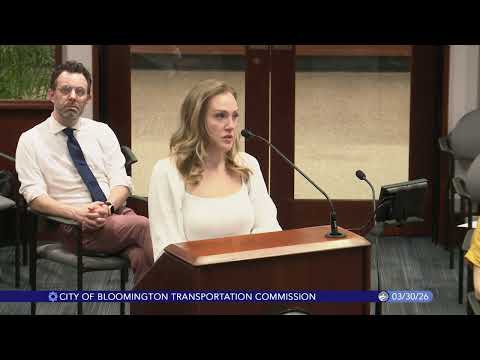
Brianna Alexander, the child’s mother, described being in the emergency room while her daughter, Lena, “repeatedly vomit up the blood she had swallowed from missing teeth” and urged the commission to “allocate funds for immediate safety improvements at the intersection of Smith Road and Morningside Drive.” Lena, who addressed the commission in person, said the driver ran the stop sign, and that she sustained a broken jaw in three places and lost three front teeth.
Why it matters: the intersection is part of the Morningside Greenway and is used daily by schoolchildren, families and commuters. Multiple speakers — neighborhood leaders, Girl Scout Troop 1900 members and longtime residents — told the commission the crossing is repeatedly ignored by drivers and cited near‑misses and prior crashes. Petitioners and commenters urged treatments ranging from flashing stop signs and high‑visibility crosswalk paint to rumble strips, raised crosswalks, refuge islands and increased enforcement.
Engineering staff told commissioners there are tradeoffs and practical constraints for some measures. City engineer Andrew Seabour said adding rumble strips in a residential area can generate noise and is not an industry‑standard urban treatment, while other changes such as upgrading crosswalk markings or installing an additional stop sign on the opposite approach could be implemented more quickly. Staff recommended further evaluation of compliance (how many vehicles stop or roll through) and speed data as part of the inquiry.
The commission first approved an amended motion to request an additional study of the Smith/Morningside location “in the context of contemporary safety standards for the city’s greenway system,” then approved a second directive asking staff to develop a petition recommending ‘‘near‑term achievable interventions’’ to maximize compliance with the all‑way stop and improve safety for vulnerable users. Both actions were approved by roll call vote.
What the public asked for: speakers recommended a menu of treatments including high‑visibility (continental) crosswalks, flashing or lighted stop signs, raised crosswalks, rumble strips, speed tables, protected bike lanes, refuge islands, flexible delineator posts and enhanced enforcement for distracted driving. Several residents offered incidental evidence, including a homeowner’s video tally of dozens of vehicles rolling through the stop in a short observation window.
What comes next: staff will produce the requested study and develop a petition outlining near‑term options and criteria for selection. Commissioners discussed prioritizing options that could be done quickly and with existing funding while ensuring the approach can be reconsidered in a longer, systemwide greenway review.
The commission’s motions do not themselves install equipment; they direct staff to evaluate, engage the neighborhood and return with recommendations or to advance the petition through the commission process.