Get Full Government Meeting Transcripts, Videos, & Alerts Forever!
Get email alerts on the Municipal Governance topic
No spam. Unsubscribe anytime.
Council repeals a 46‑year-old property-advertising requirement after heated debate on transparency
Summary
Council members voted to repeal Section 2-4 of the municipal code, which required advertising and council review before city property sales. Sponsors said the provision had not been followed in decades; opponents warned repeal would reduce transparency and urged amendment instead. The measure passed after staff reported no historical records of enforcement.
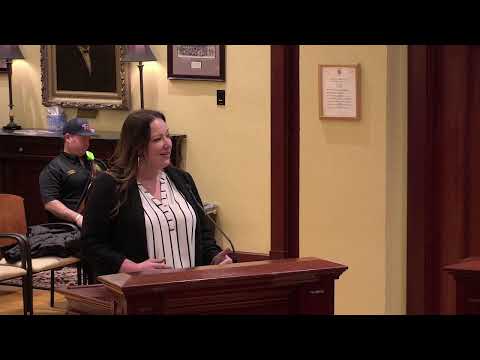
The North Little Rock City Council voted on March 9 to repeal Section 2-4 of the municipal code, a decades-old provision that previously required the council to consider how the city advertised property sales.
Council members Ross and Robinson sponsored the ordinance (O-26-15). Sponsors argued the requirement was not practical, noting the provision had not been enforced in recent decades; supporters said removing it would align the code with current practice. Opponents, including Council members Hamilton and Hart, said the provision provided an important transparency safeguard that should be revised rather than erased.
City Attorney Amy Fields and Clerk Whitby reported that they could not find records showing the subsection had been used in the past 46 years. Fields said past land sales remain legally defensible but that repealing the code was a policy choice for the council. Clerk Whitby said her searches of records and minutes found no resolution history that matched the code’s advertising requirement.
Debate highlights: Council members who favored repeal said codified language that is not followed creates confusion and that councilors may reintroduce updated language if needed. Council members who opposed repeal said some advertising and transparency steps have been used on recent sales and argued the city should update the section to preserve public notice and accountability.
Vote and outcome: After discussion, the council voted to adopt the ordinance and to apply the emergency clause (roll-call votes recorded in the transcript). The measure passed by a recorded majority.
Why it matters: The change alters how the city manages the process for disposition of municipal property — removing a requirement that, in some cases, provided explicit notice to the public about how property would be offered for sale or by what method (sealed bid, public notice, direct solicitation). Supporters framed repeal as updating code to reflect long-standing practice; critics warned it could reduce routine public opportunities to observe property-disposition decisions.
What’s next: Council members said those who want a transparency mechanism can bring an amended ordinance back for consideration; staff said past sales are likely legally valid but cautioned that litigation is always possible.