Get Full Government Meeting Transcripts, Videos, & Alerts Forever!
Get email alerts on the Early Literacy topic
No spam. Unsubscribe anytime.
Fairfax County Public Schools pilot says Walk to Read shows early gains at Holland Meadows
Summary
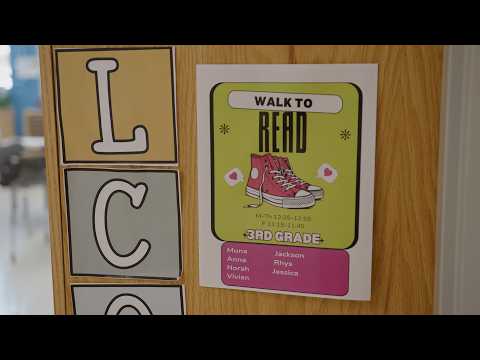
Fairfax County Public Schools staff presented early results from the Walk to Read intervention at Holland Meadows—one of 29 participating schools—saying teachers reported about a 10% increase in students reading on grade level after three months; baseline and measurement details were not specified.
Fairfax County Public Schools staff said a schoolwide "Walk to Read" intervention at Holland Meadows—one of 29 FCPS schools using the program for about three months—has produced early gains, with teachers reporting roughly 10% more students reading on grade level.
A presenter for FCPS opened the description of the program, saying elementary schools provide 30 minutes of daily intervention in addition to core reading instruction and that Walk to Read intensifies that block for schools needing extra support. "We take all the data from the assessments and then go over it together as a team and kind of decide if students need to be moved ... and kind of make sure that their group is fitting their needs better," a staff member at Holland Meadows said.
Why it matters: The district has a strategic goal that all students read by third grade. Teachers at Holland Meadows said Walk to Read helps them provide focused small-group instruction while keeping whole-group tier-one lessons intact, allowing students with reading plans and others to get targeted help without pulling the classroom teacher away from core instruction.
Teachers described collaborative planning with a reading specialist and other staff. "I started working with the reading specialist and she was helping me ... learn what I needed to teach my group," one staff member said. The teacher said that, after reviewing assessment data in team meetings, students identified as moderate or high risk began meeting or exceeding expectations.
A student who spoke about the program described learning strategies for decoding and spelling: "Before we walked to read, I could like spell only like five sentence, but now I can spell like a lot," the student said. Staff also described high enthusiasm for the transition between classroom and small-group instruction: one teacher joked that students "run to read."
Teachers cited specific improvements: one staff member said two students moved from "high risk" to "on grade level," and another said the school has seen "10% more of our students are reading on grade level," a figure the presentation tied to the county initiative. The transcript does not specify the baseline measurement, the assessment tool used for the percentage change, or the exact timeframe for the reported gain beyond "three months." The teachers said they are tracking progress and connecting results to individualized reading plans.
Program mechanics: Presenters described Walk to Read as a rotating small-group model in which additional adults (reading specialists and other staff) work with grade-level groups so that the classroom teacher can deliver tier-one instruction to the whole class. Staff said the model reduces planning burden by letting teachers focus on one group and one skill during the intervention block.
No formal board action or vote was reported in the presentation. Presenters and teachers said the school will continue to review data and adjust group placements, and they emphasized collaborative celebration of student growth.
The presentation included a typographical reference to "Walktore" in the transcript; the program discussed throughout the presentation is the Walk to Read intervention described by FCPS staff.