Get Full Government Meeting Transcripts, Videos, & Alerts Forever!
Get email alerts on the Motus Program topic
No spam. Unsubscribe anytime.
Polk County and Drake University researchers promote Motus stations at Chichaqua Bottoms to map bird stopover sites
Summary
Polk County Conservation and a Drake University ornithologist described plans to deploy Motus tracking stations at Chichaqua Bottoms Greenbelt to identify critical migration stopover and refueling sites, noting Iowa's habitat loss and long-term bird declines.
Doug Sheileley, a natural resources supervisor with Polk County Conservation, and Dr. Mir Eaton, an ornithologist and professor at Drake University, described efforts to deploy Motus tracking stations at Chichaqua Bottoms Greenbelt to study bird migration.
"I work for Polk County Conservation as a natural resources supervisor," Sheileley said, introducing the county's wildlife-management work and the idea of creating monitoring stations across the Western Hemisphere. Dr. Eaton said she is collaborating from Drake University's natural history collection and that Chichaqua Bottoms, alongside the South Skunk River, is an ideal site for a station.
"Migration is a stressful time for birds, but it's also not well understood," Dr. Eaton said, arguing that the Motus network can reveal where birds stop to refuel and rest. She said that identifying stopover sites is important because few species migrate nonstop and protecting those sites can help sustain populations.
Dr. Eaton noted broader conservation context: "Since 1970 we've lost 3 billion birds," she said, linking that scale of decline to habitat loss. Both speakers said Iowa has lost much of its native grassland and that restoring suitable habitat at places such as Chichaqua Bottoms creates opportunities for species recovery.
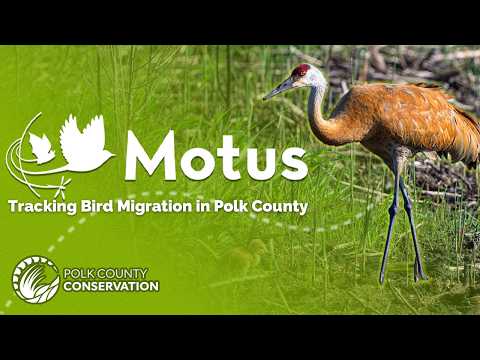
As an example of local recovery, Dr. Eaton said sandhill cranes have become established breeders on the Chichaqua landscape and estimated "at least half a dozen breeding pairs" across the site. She and Sheileley presented the Motus deployment as a tool to improve understanding of migration patterns and guide habitat-protection efforts.
The excerpted remarks focused on scientific goals and local observations; the transcript does not record formal actions, votes, or funding decisions in this segment. The speakers emphasized research and monitoring rather than immediate policy changes or commitments.