Get Full Government Meeting Transcripts, Videos, & Alerts Forever!
Get email alerts on the Workplan And Policy topic
No spam. Unsubscribe anytime.
Littleton Arts Board advances venue, hotel feasibility studies, creative-district push and public‑art program administration
Summary
The board outlined a 2026 workplan including a venue feasibility study (RFP and vendor selection), a hotel feasibility study partially funded by Economic Development with a $22,000 museum contribution, a Colorado Creative Industries district effort, and administration of the new percent‑for‑public‑art program.
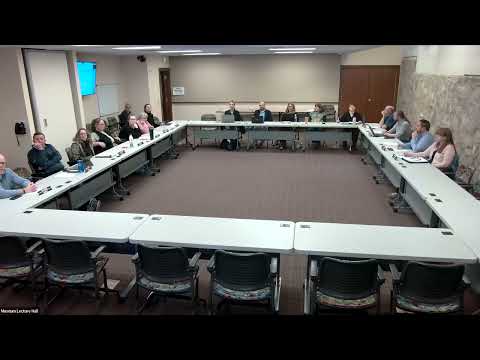
At its March 12 meeting the Littleton Arts and Culture Board reviewed a yearlong workplan that prioritizes four major initiatives drawn from the community strategic plan: a venue feasibility study, a hotel feasibility study, pursuit of a Colorado Creative Industries (CCI) creative‑district designation, and administration of the city’s newly adopted percent‑for‑public‑art program.
Tim, who led the Item 6A presentation, said the board will issue an RFP and review proposals for a venue feasibility study intended to determine appropriate size, programming and potential locations (including whether existing halls at the college or high schools could be adapted). The board plans to manage vendor selection and to present findings to city council when available.
Rachel King of Economic Development outlined plans for a complementary hotel feasibility study to evaluate occupancy trends and market demand; Rachel said partial funding is in place and the museum is contributing $22,000 from Tier‑1 funds to help start the work. "We're hoping to start sometime in Q2 with the process of going out for a consultant and bringing them on board," Rachel said.
Board members discussed boundaries and goals for a creative district and cited requirements from Colorado Creative Industries, including a contiguous geography, local government recognition, community support and a minimum operating budget (the board cited a $10,000 minimum and paid staff as application elements). Members favored a walkable, downtown‑centered boundary that would include the library and museum as anchors while leaving room to expand along Littleton Boulevard or a mid‑century corridor.
On the percent‑for‑public‑art program — a council‑approved policy that dedicates roughly 1% of qualifying city public‑project budgets (projects over $500,000) to public art — staff estimated initial receipts this year in the "ballpark" of $40,000. Board members agreed to use the coming months for internal education, to build operating procedures for acquisitions and conservation, and to consider banking funds for a signature acquisition while working with Public Works on integration and placement.
Board members asked that feasibility study RFPs make the methodology and deliverables explicit so consultants return Littleton‑specific recommendations rather than cookie‑cutter answers. The board also discussed forming working groups to help review RFPs and vendor interviews.
No formal vote was taken; the board signaled support for moving forward with RFP development and stakeholder outreach on the four priorities, and members will reconvene on related subcommittee items at future meetings.