Get Full Government Meeting Transcripts, Videos, & Alerts Forever!
Get email alerts on the Public Health Fluoridation topic
No spam. Unsubscribe anytime.
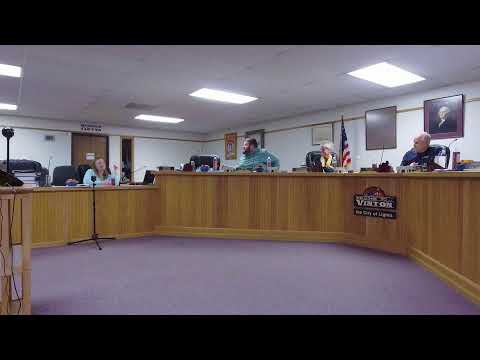
Vinton City Council pauses action after widespread public comment opposing removal of fluoride from water
Summary
After an extended public‑comment period featuring dentists, public‑health officials and residents, the Vinton City Council did not vote to discontinue water fluoridation at its Feb. 12 meeting because required 90‑day public and Iowa HHS notice had not been provided.
The Vinton City Council heard more than an hour of public comment on Feb. 12 about a proposal to stop adding fluoride to the municipal water supply, but council members declined to act after staff and council said the statutory 90‑day notice to the public and to Iowa Department of Health and Human Services had not been completed.
Public‑health experts and local dental professionals urged the council to keep fluoride in the water. "Community water fluoridation helps everyone," said Dr. Steve Levy, a professor at the University of Iowa College of Dentistry, who summarized national cost‑benefit studies showing substantial savings in dental treatment costs. Becky Hackley, I‑Smile coordinator for Benton and neighboring counties, told council staff that Vinton's 2025 fluoride level was at the 0.7 mg per liter target and cited local school screening data showing lower treatment need in that community.
Why it mattered: The public comments framed fluoridation as an equity and prevention measure that protects children, older adults and residents who lack routine dental care. "It saves about 25% on cavities and things in young children," said resident Lois Mini, who said she only learned that removal was being considered shortly before the meeting. Grace Schmidt, director of the Benton County public health department, told the council that very few local dental providers accept Medicaid and said removal would disproportionately affect low‑income residents.
Legal and procedural barrier: Dr. Sarah Stupen, a local dentist, reminded the council of a legal posting requirement: "There is a law requiring 90‑day notice to the public and to Iowa HHS before any action is taken and that a vote is considered action." Council members and staff agreed the notice had not been provided. As a result, no council member moved to adopt the resolution to discontinue fluoridation; staff stated, "We have provided 90‑day notice. That would be correct. So there's no motion," and the item died for lack of motion.
Council next steps: Multiple speakers encouraged a fuller public process and additional study—several suggested outreach, public forums, and review of recent studies. Several residents and clinicians offered to help the city apply for grants to cover equipment costs if that was a concern. The council did not adopt a policy change at the meeting; the issue may reappear on a future agenda after the required notices and any additional staff work are completed.
The meeting record shows the matter was discussed under agenda item C; no formal vote on discontinuing fluoride occurred at the Feb. 12 meeting.