Get Full Government Meeting Transcripts, Videos, & Alerts Forever!
Get email alerts on the Medical Legal Partnerships topic
No spam. Unsubscribe anytime.
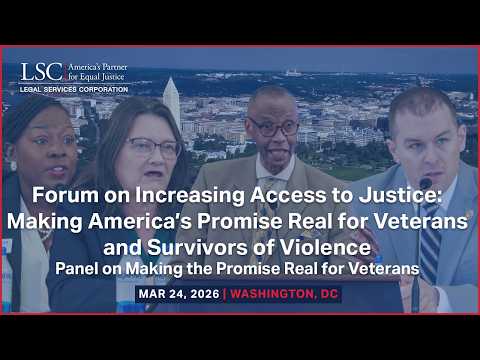
Panelists: embedding legal advocates in VA clinics, warm referrals key to reaching veterans
Summary
Bay Area Legal Services and Southeast Louisiana Legal Services described expanding medical-legal partnerships inside VAs and using warm referrals, partner training and on-site clinics to connect veterans to civil legal help.
Panelists described a model that places legal advocates directly in VA medical facilities and builds relationships with social workers and clinicians to close access gaps.
"A medical-legal partnership is where legal service advocates and their support team is embedded in the medical facility," Bay Area Legal Services' managing attorney Pye Young said, describing the Bay Pines model. Young said the program has grown from one location to seven clinics across a five-county service area and that warm referrals from VA social workers help bridge the gap between clinical and legal services.
Panelists said the model depends on relationship-building and regular partner training so nonlegal staff recognize when a veteran has a legal issue. "If we give a client a piece of paper and say, ‘call this number,’ that doesn't work as well as when the social worker reaches out and says, ‘I have a client here,'" Young said. Laura Tuggle of Southeast Louisiana Legal Services said going to where veterans are and removing barriers — including rebranding units and locating services at VA sites or community housing like the Bastion — increased participation.
Speakers recommended expanding these partnerships and training front-line VA staff and community partners to make referrals. They also encouraged clinics and pro bono collaborations with private and in-house counsel that include malpractice coverage and mentorship, which can help firms contribute without creating ethical or practice-area risks.
No formal agreements or policy changes were announced at the event; panelists framed the discussion as program-level best practices and local expansion plans.