Get Full Government Meeting Transcripts, Videos, & Alerts Forever!
Get email alerts on the Workforce System topic
No spam. Unsubscribe anytime.
City officials tout new CCME program as part of enterprise workforce push
Summary
City administrative leaders and workforce providers told a City Council committee they have consolidated workforce functions into a City College for Municipal Employment (CCME) that has enrolled about 150 people since October 2024, with early municipal hires but ongoing challenges around placement scale, adult literacy and retention.
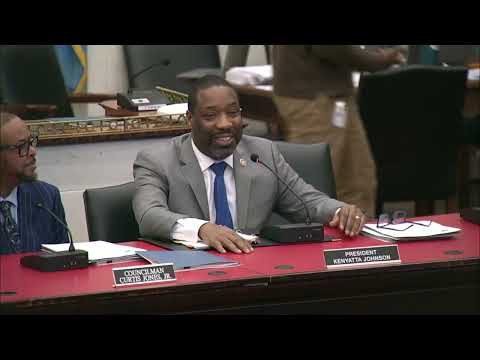
Philadelphia City Council heard detailed testimony on March 18 about a newly centralized workforce effort that city officials say is designed to align training, hiring and supportive services across city government.
The administration's chief administrative officer, Camille Duchas, told the Committee on Commerce and Economic Development that the City College for Municipal Employment, or CCME, is intended as an enterprise approach connecting Community College of Philadelphia (CCP), department hiring needs and nonprofit partners to create clearer pathways into municipal and regional employment.
The administration framed CCME's strategy around five elements: building direct service pathways, aligning investments and funding, creating cross-system collaboration, strengthening employer-driven training partnerships and promoting coordination among city programs. Duchas said the FY27 budget will create an economic mobility cabinet to further embed workforce and anti-poverty priorities across departments.
Carol DeFreeze, CCME's executive director, told council the program has enrolled a little more than 150 individuals since launching in October 2024, with 30 completers in FY25 and additional completers this fiscal year. She said about four completers have been hired directly into city jobs and several more into city-related fellow placements; a CCME fellows program is intended to expand those municipal hiring pathways.
Council members pressed the panel on measurable outcomes. Patrick Clancy of Philadelphia Works said the official unemployment rate in the city is roughly 5 percent but cautioned that figure omits discouraged job‑seekers and understates neighborhood disparities; he and others stressed the need to track job placement, six‑month retention and career progression rather than first placement alone.
Witnesses acknowledged persistent barriers. Panelists and council members described adult literacy and basic-skill gaps as constraints on apprenticeship and skilled-trades hiring and noted a "benefits cliff" for single parents, where the loss of public supports after starting employment can make work economically infeasible in the short run. The mayor's office said it leads an adult education network of roughly a dozen providers and cited a recent William Penn Foundation grant to expand services.
City staff described operational changes intended to speed the transition from training to hiring: closer coordination with the Office of Human Resources, efforts to map training credentials to civil‑service qualifications, and a shift away from some written civil‑service exams toward training-and-experience or competency-based pathways where appropriate.
Council members called for clearer, public metrics on CCME outcomes and asked that the administration provide placement, retention, demographic and vacancy‑filling data as the program scales. The hearing closed with committee members emphasizing that CCME is an evolving initiative: early results show promise, but council said it will continue to monitor placement rates, credentialing and whether wraparound supports are sufficient to sustain employment.