Get Full Government Meeting Transcripts, Videos, & Alerts Forever!
Get email alerts on the Nomination topic
No spam. Unsubscribe anytime.
Nominee Louis Bosa draws broad support at Guam Civil Service Commission confirmation hearing
Summary
The Guam Legislature's Committee on Finance and Government Operations heard oral testimony April 6 backing the governor's nomination of Louis Bosa to the Civil Service Commission; senators questioned him on Hatch Act enforcement, use of administrative law judges and recusal practices. The committee will accept written testimony for seven days before forwarding his packet for a May vote.
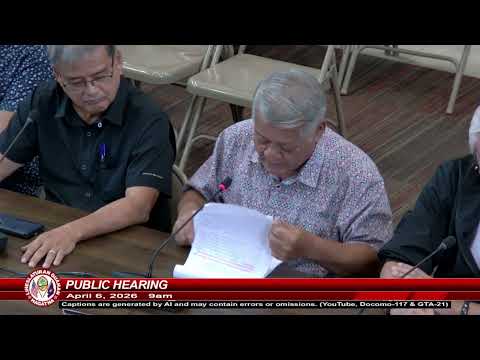
The Committee on Finance and Government Operations held a public hearing on April 6 to consider the governor's nomination of Louis Bosa to the Guam Civil Service Commission. Former colleagues and multiple current civil‑service officials testified in support, and senators used the session to ask about enforcement of political‑activity rules, case processing and potential conflicts of interest.
Several supporters described Bosa's long record with the commission and government service. "Mr. Bosa has all the credentials to immediately walk into the civil service commission," Juan Kawo told the committee, citing Bosa's prior service as executive director and chairman and his role implementing the Hay job‑evaluation methodology. Tony Laena said Bosa was "probably the most qualified," and the vice chairman of the commission submitted a written statement highlighting Bosa's private‑ and public‑sector human‑resources experience.
Bosa spoke directly to senators about his record and his reasons for returning after retirement. "I am pro‑merit," he said, describing a career that progressed from entry‑level personnel work to executive director and multiple commissioner terms. He told the committee he is prepared to help the commission address quorum and caseload problems and to apply laws and due process when deciding appeals.
Senators focused their questions on several recurring themes. On enforcement of the Hatch Act (cited in testimony as Title 4, Chapter 5), Bosa said the commission has handled complaints and conducts training during election cycles so classified employees understand dos and don't‑dos. "Employees want to get involved, but they have to understand the rules and the laws," he said, adding that most complaints to the commission were resolved without escalation.
Lawmakers also asked about the commission's use of administrative law judges (AOJs) to speed case handling. Witnesses and the nominee described the AOJ as a first‑line factfinder whose recommendations the commission either ratifies or rejects; proponents said AOJs free commissioners to hear other matters and help move cases forward.
The committee probed conflict‑of‑interest and recusal practices after senators said they had received concerns from callers that a nominee might favor executive requests. Asked whether he would recuse himself on matters involving the Port Authority or other agencies where he has recent ties, Bosa said he would: "If I really know that I have a working relationship with these people, I will certainly let the chairman and the commissioners know that I need to recuse myself." When asked if he would be a "yes man," Bosa replied that his votes would follow merit‑system principles and the facts presented.
Senators and witnesses also addressed structural issues: the commission currently has five seated commissioners and needs seven; confirmation of Bosa would bring the count to six, which officials said would improve the commission's ability to meet quorums and resolve appeals. Bosa and other witnesses urged continued training for managers and employees about timelines and appeal procedures, and several speakers recommended a more uniform, government‑wide approach to job classification and compensation.
The committee accepted public oral testimony and acknowledged additional written statements in support. Chair Senator Christopher M. Dues told the public that written testimony will be accepted for seven calendar days, to be mailed or emailed to his office; the hearing record closed with the committee's adjournment at 10:17 a.m. The committee said it plans to forward the nominee's packet for a confirmation vote during the May legislative session.
Proper names and authorities referenced in the hearing include Title 4, Chapter 5 (the Hatch Act as cited in testimony), Title 44 GCA (personnel/merit system provisions cited during testimony), and Public Law 31‑59 (mentioned in supporters' remarks about implementing Hay methodology).