Get Full Government Meeting Transcripts, Videos, & Alerts Forever!
Get email alerts on the Voting Rights topic
No spam. Unsubscribe anytime.
Committee advances Alabama Voting Rights Act after public hearing; advocates praise restoration and expanded access
Summary
After a public hearing featuring civil-rights and civic groups, the Judiciary Committee gave HB 486 a favorable report. The bill would restore voting rights to eligible returning citizens, create guaranteed absentee and advanced voting periods, and establish a Voting Rights Commission and statewide elections database.
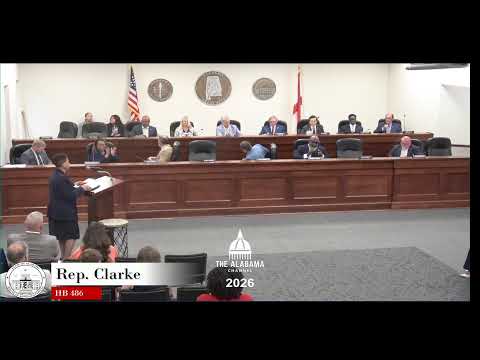
The House Judiciary Committee on April 1 held a public hearing on House Bill 486, dubbed the Alabama Voting Rights Act, and voted to give the measure a favorable report after testimony from voting-rights advocates.
Representative Clark, carrying the bill, said HB 486 would "modernize Alabama elections" by restoring voting rights automatically to eligible returning citizens, establishing guaranteed absentee voting and a statewide advanced voting period, creating a Voting Rights Commission to review election changes, and building a statewide elections database to improve transparency.
Jerome Dees of the Southern Poverty Law Center framed the bill in historical context, citing Shelby County v. Holder and recent litigation such as Allen v. Milligan, and argued state-level protections are needed to prevent vote dilution. "This bill restores fairness by automatically restoring voting rights to eligible citizens who have completed their sentences," he said.
Kim Bailey, president of the League of Women Voters of Alabama, said Alabama’s restrictive voting rules have contributed to low turnout and described HB 486 as a step to remove barriers and make voting "easy, not burdensome." Samuel (Sam) Duff of the ACLU of Alabama emphasized that HB 486 would bring Alabama into line with most states on early and absentee voting and would make election administration more accessible.
After the testimonies, committee members who had called for the hearing moved and seconded a motion to give HB 486 a favorable report; the committee voted in favor by voice vote and the chair announced the bill had a favorable report.
Representative Clark and supporters said the bill aims to expand participation and reduce litigation by creating a preemptive review structure for proposed election changes. The committee advanced HB 486 to the next stage with a favorable report.
Next steps include formal scheduling for floor consideration and potential further amendment as the session continues.