Get Full Government Meeting Transcripts, Videos, & Alerts Forever!
Get email alerts on the Criminal Procedure topic
No spam. Unsubscribe anytime.
House committee debates bill letting officers attest to colleagues' citations; substitute adopted but measure denied favorable report
Summary
The House Judiciary Committee on April 1 considered SB 330, which would let sworn officers attest electronically or in person to colleagues' citations to reduce overtime. Clerks warned it weakens magistrate oversight; the substitute was adopted but the committee declined to give the bill a favorable report.
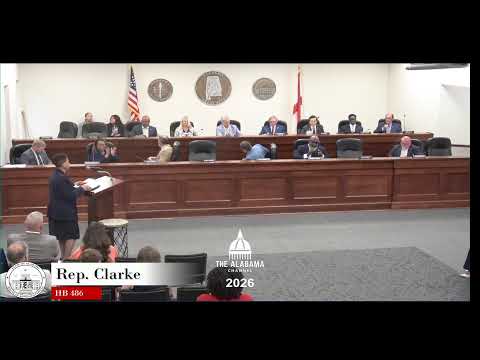
The House Judiciary Committee on April 1 debated SB 330, a bill that would let sworn law-enforcement officers attest to colleagues’ written citations and misdemeanors electronically or by having another officer attest in person. Proponents said the change would reduce overtime by allowing officers to avoid waiting in magistrate offices after late shifts; opponents raised concerns about preserving the magistrate’s role and potential courtroom consequences.
Senator Bell, who presented the bill, said it is designed "to save overtime money" and to give officers "the electronic means, whether it's on Zoom or some link, to swear to the citations that they're writing." He and others framed the substitute as clarifying definitions and permitting telephonic attestation for noncustodial complaints.
Mary Robinson, circuit clerk of Lee County and president of the circuit clerks association, told the committee clerks were largely opposed. "The checks and balances that were made the cornerstone of our system are basically taking a left turn with this additional third party being able to come in," she said, urging exclusions for serious misdemeanors and a conflict clause so subordinates are not compelled to attest for supervisors.
Randy Hillman, representing the Sheriffs Association, responded that the second officer would function like a notary — attesting only to a signature or that a sworn attestation occurred — and would not make any probable-cause determination. "None of us are usurping anybody's authority," he said, arguing the bill targets routine administrative burdens that force municipalities to pay overtime.
A defense-oriented speaker raised practical concerns about litigation effects: allowing one officer to attest for another could lead defense lawyers to subpoena both officers and test discrepancies, potentially doubling courtroom appearances and undermining the overtime savings sought.
Committee members pressed for compromises: several urged consultation with clerks and sheriffs, carve-outs for certain offenses (for example, sexual-misconduct or domestic-violence statutes), and clearer safeguards for magistrates' determinations. After adopting the substitute amendment that clarified definitions and added procedural language, the committee moved to give the measure a favorable report. Following debate and a point of order requesting a roll call, the chair announced the committee would not give SB 330 a favorable report.
The committee did not advance SB 330; members left open the option of further work to reconcile clerks’ and sheriffs’ concerns.
The committee moved on to other bills and adjourned for the session year.