Get Full Government Meeting Transcripts, Videos, & Alerts Forever!
Get email alerts on the Budget Revenue topic
No spam. Unsubscribe anytime.
Granite School District projects $4.5 million preliminary shortfall, staff recommends reinstating denied tax increase
Summary
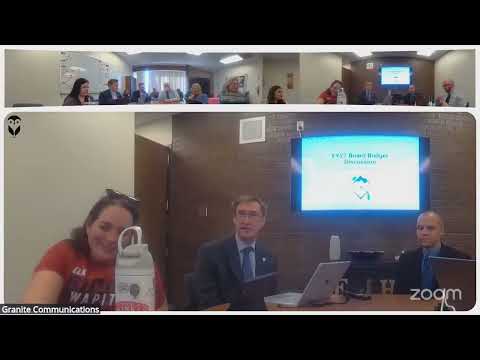
At a March 24, 2026 Granite School District study session, staff told the board a preliminary $4.5 million shortfall is likely for FY2027 and urged consideration of reinstating last year’s denied property tax increase (roughly $14.5 million) while outlining reserve draws and spending slowdowns to bridge the gap.
At a March 24, 2026 Granite School District study session, district finance staff told trustees that preliminary FY2027 modeling shows about a $4.5 million shortfall and recommended reinstating the $14.5 million in property-tax revenue that was denied at last year’s truth‑in‑taxation hearing.
“We're looking at about a $4.5 million shortfall,” Todd Hubbard, a district staff presenter, told the board as he walked trustees through revenue and expenditure assumptions. Hubbard and staff emphasized the figures are early estimates that will change once assessed valuations are certified in mid‑May.
Why it matters: staff said the district received a 4.2% increase in the Weighted Pupil Unit (WPU) from the state but that much of that funding is legally restricted or consumed by restored costs and defunded programs. The district reported roughly $14.6 million in operational revenue and $2.2 million in capital revenue that did not materialize because the tax increase was denied; staff focused on the dollar shortfall rather than an exact levy rate until valuations are final.
What staff proposed: presenters described a multi‑pronged approach to keep the current year balanced and to prepare a FY2027 budget. Steps already under way or proposed include a hiring freeze for non‑classroom positions, drawing on specific set‑asides (for example a portion of an early‑retirement reserve and IT/ERP funds), slowing or pausing discretionary travel, and delaying some program expansions. Staff cautioned many reserves are legally or operationally restricted (self‑insurance, workers’ compensation, food services) and cannot be used for general operations.
New legal and timing constraints: staff also outlined recent truth‑in‑taxation law changes that require separate public notices and a property‑tax impact schedule in budget hearings, and said a portion of proposed tax increases must be placed in a restricted reserve until the increase is formally approved. Trustees said the schedule is frustrating because certified assessed valuations arrive only in mid‑May, leaving little time to calculate taxpayer impacts before negotiations and public hearings.
Board response and next steps: trustees pressed staff for more detail on the dollar‑level impacts to households and for clearer timing; several expressed frustration with negotiating on estimates. Staff said they will return with refined figures after May valuation certification, provide the required impact schedule and notices, and continue to present options that combine reserve use, targeted program reductions, and a proposed restoration of the denied tax increase.
Where the numbers came from: staff cited the state WPU adjustment, estimates from the Common Data Committee on assessed valuations, and the district’s internal program and reserve spreadsheets. All dollar figures presented were described as preliminary and contingent on May tax‑commission certifications.
The board did not take a formal vote on tax policy at the session; staff asked trustees for direction and committed to bringing revised proposals and the statutorily required truth‑in‑taxation notices back at upcoming meetings.