Get Full Government Meeting Transcripts, Videos, & Alerts Forever!
Get email alerts on the Education Policy topic
No spam. Unsubscribe anytime.
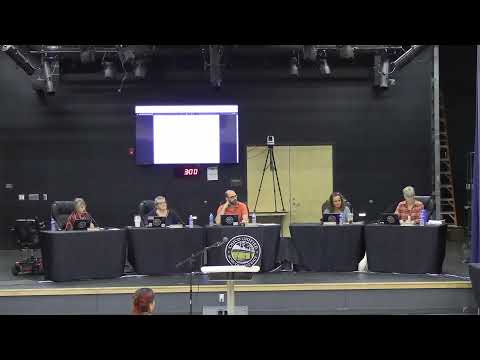
Chico Unified board hears detailed workshop on block schedules, credits and supports for at‑risk students
Summary
District high‑school leaders told the board the move to block scheduling created space for interventions — academic‑success classes, math labs, newcomer English and co‑teaching — and said alternative‑education programs (Cal, AFC, Fairview, Oakdale/Oakridge) are being expanded to re‑engage students and boost credit recovery.
The Chico Unified School District board on May 14 received an extended workshop from district and high‑school staff describing how block scheduling has shaped interventions and alternative‑education options at Chico High and Pleasant Valley High.
Superintendent Kelly Staley introduced the high‑school secondary team; Erica Sheridan and Damon Whitaker, who led the presentation, said Chico High implemented an AB 8‑period rotating block in 2021–22 and Pleasant Valley followed the next year to create scheduling flexibility for interventions and enrichment. Sheridan said the schedule was developed after a multi‑site research effort that aimed to solve 14 core dilemmas — including how English learners and students with IEPs fit electives and supports — and to give students time for both advanced and support coursework.
‘‘The block schedule allowed us to add academic‑success classes for 9th and 10th graders, math labs, power reading using Read 180 and newcomer English classes,’’ Sheridan said, describing programs that staff say have helped students recover credits and stay on track.
District staff detailed tiered supports under MTSS (multi‑tiered system of supports): whole‑class instruction (tier 1), small‑group interventions (tier 2) and individualized instruction (tier 3). Presenters said those layers were augmented by wellness counselors, targeted case managers, site monitoring meetings that trigger re‑case reviews, and a technology‑supported threshold system (Edge Climber) to flag academically disengaged students.
‘‘We saw huge learning loss and disengagement through COVID,’’ Damon Whitaker said. ‘‘The block schedule really allowed students to get back on the horse and be successful.’’
Presenters also outlined complementary alternative‑education pathways for students who need different placements: Cal (junior‑high credit recovery), AFC (community day for grades 6–12, often used after SARB or expulsion proceedings), Fairview (9–12 continuation hub focused on literacy and credit recovery) and Oakdale/Oakridge (independent‑study options with in‑person tutoring, hybrid models and college‑prep tracks). Rhonda Odlam, who oversees Oakridge and the district’s medically necessary instruction program, described orientation, home visits and a high level of family outreach by targeted case managers.
District leaders emphasized that the block schedule is not a one‑time fix: staff said the district regularly reviews data (state dashboard, progress reports and student feedback), adjusts intervention lists, and is exploring additional innovations such as a shorter common intervention/enrichment period during the day. Several board members and the presenters noted increased dual‑enrollment and AP participation and a leveling of curricular access for students who formerly could not fit support classes and electives.
The workshop was informational only; no board action was required. Staff said they will continue to monitor outcomes and return with implementation updates and proposals as needed.