Get Full Government Meeting Transcripts, Videos, & Alerts Forever!
Get email alerts on the Foreign Assistance Oversight topic
No spam. Unsubscribe anytime.
Subcommittee chair decries waste, fraud and abuse in U.S. foreign assistance
Summary
The chair of the Oversight and Intelligence Subcommittee opened a hearing saying decades of oversight failures have allowed contractors and hostile groups to profit from U.S. foreign assistance, citing a $259 million Afghan road project, SIGAR estimates that 30–40% of aid reaches intended populations, and a USAID bribery scheme.
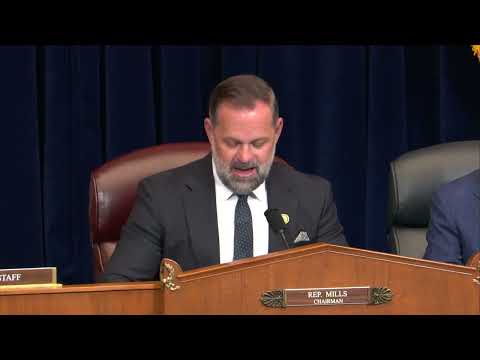
The Oversight and Intelligence Subcommittee of the House Committee on Foreign Affairs opened a hearing on waste, fraud and abuse in U.S. foreign assistance, with the chair arguing that long‑standing oversight failures have allowed bad actors to siphon aid away from intended recipients. The chair thanked witnesses for appearing and said the hearing would seek reforms to better safeguard taxpayer dollars.
The chair described firsthand observations from Afghanistan, saying, “Between 2005 and 2017, $259 million was spent on a road project that was never even completed. After 12 years, only about 15% of the road was built, and even those sections that were completed quickly deteriorated.” The remark was offered as an example of contractors benefiting from insufficient oversight.
Citing an audit office, the chair said oversight reports show a substantial portion of donor funds do not reach their intended beneficiaries. “In 2025, the Special Inspector General for Afghanistan Reconstruction, SIGAR, estimated that as little as 30 to 40% of donor funds actually reach the intended population,” the chair said, pointing to fees, bribes and extortion as key loss points.
The opening statement further linked aid diversion to security risks. The chair said armed groups have extorted and enriched themselves through international aid, naming the Taliban and al‑Shabab as examples that have collected taxes and created roadblocks to U.N. assistance. The chair also recalled historical instances in Somalia where local actors manipulated aid flows for profit.
Turning to recent prosecutions, the chair described an alleged bribery scheme involving a contracting officer at the United States Agency for International Development (USAID). According to the chair, a contracting officer received an estimated $1 million in bribes to alter procurements in favor of particular awardees; the chair added that three company owners pleaded guilty in a decade‑long scheme involving more than $550 million in prime contracts.
Throughout the statement the chair characterized the problem as systemic, saying inspector generals and auditors have repeatedly flagged weak internal controls at the award stage and opaque layers of subcontracting that create opportunities for abuse. “Opportunistic bad actors have for years exploited pervasive weaknesses in the system of foreign assistance that we created,” the chair said.
The chair framed reforms as simultaneously humanitarian and strategic, urging that effectiveness be measured by outcomes rather than dollars spent. “We have an opportunity to chart a new path forward, a path that safeguards U.S. funds and that is not enriching our enemies,” the chair said, and described recent executive actions as a step toward addressing corrupt practices.
The chair closed the opening statement by reiterating the subcommittee’s goal to expose waste and hold accountable those who exploit assistance programs. The hearing proceeded to witness testimony and questioning intended to examine causes and potential reforms in greater detail.