Get Full Government Meeting Transcripts, Videos, & Alerts Forever!
Get email alerts on the Identification Evidence topic
No spam. Unsubscribe anytime.
Appeals court weighs whether court‑officer identifications survive Kraton challenge in Lara appeal
Summary
In Commonwealth v. Lara, defense counsel argued that two court officers misidentified a different person at trial and that the in‑court identifications were effectively show‑ups; the Commonwealth urged the court‑officer exception and cited the courtroom’s closed context and contemporaneous materials (photograph jackets, video).
Joseph Vone, representing Kevin Lara, told the panel that both court officers who testified at trial thereafter identified the wrong person and that the court’s ‘good‑reason’ finding lacked foundation. Vone argued the mistake went to admissibility under Kraton because the in‑court identification functioned like a show‑up and the defense had not had a reliable pretrial identification procedure.
The court asked whether the officer exception to Kraton would allow in‑court testimony by officers who had arrested or otherwise witnessed the event; the Commonwealth’s attorney, Chris Amaral, argued the panel should treat the court officers as possessing arresting authority within the courthouse environment and relied on the closed nature of the transport and the availability of jackets (photographs) used to identify inmates. Amaral also pointed to the video of the incident and said the closed environment plus other nonpolice evidence supported admissibility.
Defense counsel countered that both court officers’ testimony at trial was inconsistent and that the seven‑year gap between incident and trial made identifications unreliable; he pressed the panel that the identification problems went beyond mere weight and raised foundational concerns about fairness.
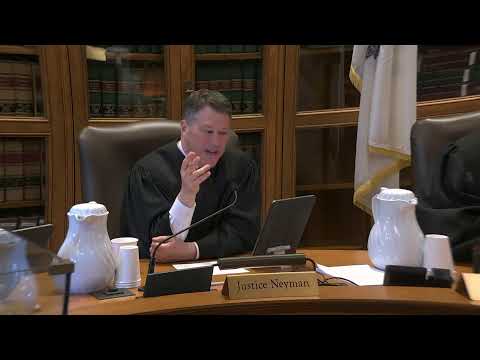
The panel discussed exceptions for arresting officers and the extent to which courtroom familiarity (the “familiarity prong”) or pretrial procedures may cure risks of misidentification. Justices debated whether misidentification by court officers should be resolved at admissibility or left to the jury after cross‑examination. The court took the case under submission.