Get Full Government Meeting Transcripts, Videos, & Alerts Forever!
Get email alerts on the Cannabis Regulation topic
No spam. Unsubscribe anytime.
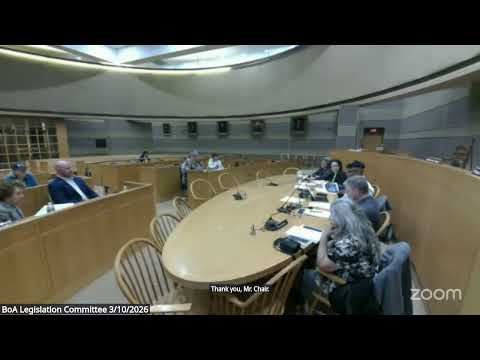
New Haven committee delays vote on ordinance to adopt municipal enforcement powers for unlicensed cannabis sales
Summary
The Legislation Committee discussed a reworked ordinance to adopt municipal civil‑penalty and abatement powers under recently changed state statute 21A‑420C but passed the item over for further legal clarifications and updated state language.
Acting Corporation Counsel Robert Williams presented a reworked ordinance that would allow New Haven to adopt the municipal enforcement authority created by recent state changes to chapter 21A‑420C, which regulates adult‑use cannabis. Williams told the committee the draft consolidates municipal authorities, establishes civil penalties, and provides a process by which the mayor or a designated official could seek court orders to abate unlicensed retailers and confiscate merchandise linked to violations.
Williams said the ordinance would authorize a city director to impose civil fines, subject to a hearing and appeal procedure. “We have laid out the new authorizations and the new powers that municipalities can impose,” Williams said, describing the draft as an effort to give the city clearer tools to deter unlicensed sales that counselors said have proliferated in the region.
Committee members pressed counsel on key points they said remained unclear in the statute: whether the authority covers sales inside residences or only retail points, how a court‑ordered confiscation would affect disposition of seized merchandise, and whether ex parte enforcement could occur without an immediate administrative hearing. Counsel acknowledged statutory ambiguities and said several implementation details should be clarified in the ordinance and by coordinated city licensing rules, especially how confiscated property would be handled and how an appeal process would work.
Members also questioned which city office should hold day‑to‑day enforcement responsibility. The draft assigns initial enforcement authority to the Livable Cities Initiative director as a practical placeholder, but Williams said the ordinance could be revised to designate the health director, economic development administrator, building/zoning enforcement, or another appropriate official.
Because committee members wanted the exact 2025 statutory text and additional legal guidance (including potential consultation with the Attorney General’s Office), the committee elected to pass over the ordinance. No final vote was taken. The committee asked staff to return with clarified statutory language and recommended edits so members could consider a revised ordinance at a later meeting.