Get email alerts on the School Resource Officers topic
No spam. Unsubscribe anytime.
Roanoke County sergeant describes school resource officer program and community outreach
Summary
Sergeant Alex Wertz of the Roanoke County Sheriff's Office described the county's school resource officer program, noting it began in 2019, currently has four officers in schools and emphasizes classroom engagement and community events such as an "Easter Extravaganza."
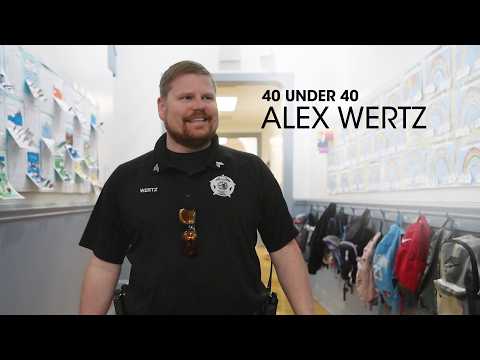
Alex Wertz, a sergeant with the Roanoke County Sheriff's Office who oversees the department’s school resource officers and serves as community outreach coordinator, described the sheriff’s school resource officer (SRO) program and its work inside county schools.
Wertz said the SRO program opened for the sheriff’s office in 2019 and that the sheriff asked him to serve because he held the required certifications. “I jumped on it immediately and haven't looked back since,” he said, calling the assignment his "dream job." He gave a numerical snapshot of the program, saying, "We have four right now in the schools."
Wertz emphasized that much of the officers’ work is nonpunitive and focused on relationship-building. He described using library visits and classroom reading to engage students without taking up formal classroom time: working with librarians “they're amazing…They let me come in and read whenever I'm coming through the building.” He said those informal contacts let officers connect with students in low-pressure settings.
The sergeant described outreach beyond schools, citing events such as an "Easter Extravaganza," which he characterized as an active and logistically involved effort: "Wasn't just standing there handing out stuff. We were engaged. We were throwing out eggs. We were doing a lot of setup stuff." He framed those events as part of the office's broader community-engagement strategy.
Wertz offered a concrete anecdote about the program’s long-term impact. He recalled a preschooler from a troubled home who once threatened him; the child was later fostered and adopted and by seventh grade showed dramatic improvement. "We just think the world of that kid," Wertz said, adding that whether or not his intervention directly caused the change, seeing the progress is the most fulfilling part of the work.
Wertz concluded by summarizing his motivation: “I do this because I love to do it,” he said, and called making an impact on a single child more rewarding than any accolade. The transcript contains no recorded votes, motions or formal requests for policy changes tied to this account.
AI generated
The text on this page is AI generated. Summaries, highlights, analysis, and video transcripts are all produced from the original source material.
AI can make mistakes, so if you spot one, and we will fix it for everyone.
Note: the source content is unaltered by us. Any content source we link to, be it a video, an audio recording, or a document, is presented exactly as its publisher released it. That publisher is usually a government body, sometimes an individual official or another organisation.