Get Full Government Meeting Transcripts, Videos, & Alerts Forever!
Get email alerts on the Middle East Conflict topic
No spam. Unsubscribe anytime.
United Nations Secretary-General urges end to fighting, dispatches envoy amid fears of wider Middle East war
Summary
The United Nations Secretary-General warned that the Middle East conflict risks escalating into a wider war with growing humanitarian and economic impacts, announced the dispatch of personal envoy Jean Arnault, and urged the United States, Israel and Iran to stop hostilities while reaffirming adherence to the UN Charter and freedom of navigation.
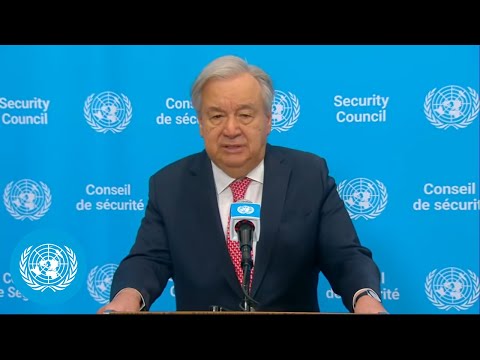
The United Nations Secretary-General warned Thursday that the Middle East crisis has entered its second month and is producing "growing human suffering" and expanding devastation, and he urged leaders to choose diplomacy over escalation.
"The spiral of death and destruction must stop," the Secretary-General said, adding that "if the drums of war keep beating, escalation will only make all of these worse." He warned that the conflict is already having global economic effects, including rising food and energy costs that affect countries "from the Philippines to Sri Lanka to Mozambique." He also cautioned that restrictions on maritime traffic would hit the poorest countries hard: "When the Strait of Hormuz is strangled, the world's poorest and most vulnerable cannot breathe."
The message included a diplomatic move: the Secretary-General said he is dispatching his personal envoy, Jean Arnault, to the region "to support these efforts." The remarks did not include a question-and-answer session.
Anchoring his appeal in international law, the Secretary-General said diplomatic efforts "deserve the space and support to succeed" and must be "anchored firmly in international law, including the UN Charter." He urged that disputes be settled peacefully and that the sovereignty and territorial integrity of member states be respected. "Civilians and civilian infrastructure, including nuclear installations, must be respected and protected," he said, and called for freedom of navigation to be upheld.
He addressed parties directly: "To the United States and Israel, it's high time to stop the war that is inflicting immense human suffering and already triggering devastating economic consequences," he said, and told Iran "to stop attacking their neighbors." He said the Security Council has "condemned these attacks and reaffirmed the need to respect navigational rights and freedoms along critical maritime routes, including the Strait of Hormuz."
The Secretary-General closed by repeating that the choice for dialogue remains possible and urging leaders to make it now. He thanked attendees before the remarks ended.