Get Full Government Meeting Transcripts, Videos, & Alerts Forever!
Get email alerts on the Special Education topic
No spam. Unsubscribe anytime.
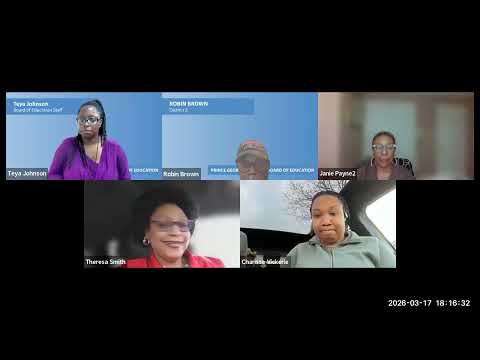
Disability board seeks timeline for AP 4172 changes, transition plan and special‑education materials; approves 2026–27 meeting schedule
Summary
At its March 17 meeting, the Disability Issues Advisory Board asked district staff for the board policy timeline tied to AP 4172, requested a detailed transition plan for moving services from a vendor to in‑house staff, raised concerns about missing SPED plan data and reading materials for deaf/hard‑of‑hearing students, and approved a motion fixing next year’s meeting day.
A committee member at the March 17, 2026 meeting of the Disability Issues Advisory Board asked district staff whether AP 4172 — an administrative procedure tied to a board policy — is on this year’s policy work plan and sought the correct title for a role that has been renamed from Equity Assurance Officer. A speaker later referred to the position as Director of Fair Practices.
The board’s members and staff clarified that board members may propose changes to the underlying board policy (BP) that governs an administrative procedure but do not have authority to edit APs directly; any changes would follow the BP revision and then be reflected in the AP. The committee asked staff to report back with whether the BP is on the policy work plan and when the public comment period would begin.
Members pressed Mr. Henderson and district staff for a concrete transition plan as functions move from an external vendor to in‑house staff under the human resources office. The committee sought specifics on the off‑boarding schedule — for example, whether cases would be transferred five at a time or on another cadence — and asked how staff will avoid gaps in timeliness as the office fills positions.
The group also raised instructional and data concerns. A committee member said the board has not yet received requested special‑education plan data covering the 2022–24 school years, a request first made in January, and asked staff to provide that information. The member also asked whether the district has reading materials for students who are deaf or hard of hearing that place American Sign Language (ASL) glosses or signing cues above the English text, which the member described as a clinical best practice for teaching these students to read.
Members discussed whether references to legislation about IEPs and 504 plans were local or state measures and agreed it may be useful to invite Dr. Faison to a future meeting because 504 plans fall under her purview. Miss Patrick proposed also engaging educators with disabilities to testify about workplace accommodations; members supported combining family and staff engagement in future planning with Mr. Dwyer and others.
The board received an announcement that Doralee Palamos, Assistant Supervisor of Secondary Transition for Prince George's County Public Schools, will speak at an upcoming CCAT event on preparing students with disabilities for life after high school.
On a governance item, Chair Smith moved that the Disability Issues Advisory Board meet on the third Tuesday of each month at 6:30 p.m. for the 2026–27 school year. A member seconded the motion, no objections were raised, and the motion passed by consensus.
The chair reminded members that the next board meeting is scheduled for April 21, 2026, and adjourned the March 17 session at 7:26 p.m.
The board requested follow‑ups on the AP 4172/BP work plan and timeline for public comment, a written transition plan for on‑boarding cases from the vendor to in‑house staff, the 2022–24 SPED plan data, and confirmation of instructional materials for students who are deaf or hard of hearing.