Get Full Government Meeting Transcripts, Videos, & Alerts Forever!
Get email alerts on the Veterans Property Exemption topic
No spam. Unsubscribe anytime.
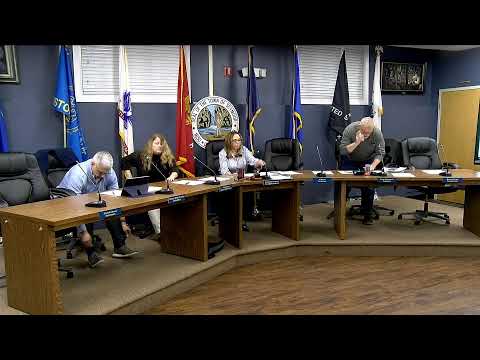
Seymour ordinance committee forwards 100% disabled veterans property‑tax exemption to select persons
Summary
The ordinance committee voted to advance a locally adopted version of Connecticut Public Act 25-168 that provides a $5,000 property tax exemption for veterans determined 100% disabled by the U.S. Department of Veterans Affairs; the measure was approved by the committee and moved forward, and the assessor was urged to prepare a simple fact sheet for applicants.
The Seymour ordinance committee voted June 23 to advance a municipal ordinance adopting the state‑authorized property‑tax exemption for veterans determined by the U.S. Department of Veterans Affairs to be 100% service‑connected disabled.
Attorney Bura presented the draft ordinance, citing Connecticut Public Act 25‑168 (PA25‑168) and related provisions of the Connecticut General Statutes that authorize municipalities, upon approval of their legislative bodies, to adopt optional property tax exemptions for qualifying veterans. The ordinance as presented limits municipal relief to veterans holding a VA determination of service‑connected total disability based on individual unemployability and sets the local exemption amount at $5,000.
Why it matters: the measure gives Seymour a local mechanism to mirror the maximum exemption permitted under state law while establishing a municipal application and certification process. Committee members emphasized the practical steps needed to implement the change, including documentation requirements and potential retroactive relief limits.
Committee discussion focused on eligibility and administration. Members and participants asked whether partial disability ratings would qualify; the committee was told the statute, as drafted, applies only to 100% VA determinations. Attorney Bura and other speakers walked through applicant documentation requirements described in the statute, including a certified copy of a veteran’s discharge or, in its absence, affidavits from disinterested parties and copies of federal income tax returns or equivalent income evidence when applicable. Committee members asked that the assessor prepare a simple fact sheet and a streamlined application specifying the three required documents so eligible veterans can more easily apply.
Public comment included a question from Kernie, who identified himself as commander of the American Legion and asked whether the relief is an abatement or an exemption; committee members and staff clarified it is an exemption that continues while the veteran retains eligibility. The ordinance text also addresses surviving spouses (sometimes referred to as gold star spouses) and provides procedures for retroactive abatement or refund in limited cases up to three years, consistent with the statute.
The committee recorded an affirmative vote to forward the ordinance to the board of select persons. The committee did not record a full named roll‑call vote in the transcript beyond the chair’s affirmative vote being recorded; the transcript shows the motion carried. The committee also moved to table the remainder of the ordinance agenda until a future meeting.
Next steps: the ordinance will be forwarded consistent with local procedure for final consideration by the board of select persons; the assessor’s office was encouraged to prepare applicant materials to accompany implementation.