Get Full Government Meeting Transcripts, Videos, & Alerts Forever!
Get email alerts on the Foreign Service Act topic
No spam. Unsubscribe anytime.
House Foreign Affairs committee opens review of Foreign Service Act, cites changing global threats
Summary
The House Committee on Foreign Affairs opened a hearing to begin a comprehensive review of the Foreign Service Act, saying the statute has not been substantially updated in roughly 45 years and should be reconsidered to reflect modern diplomatic missions and higher-risk postings.
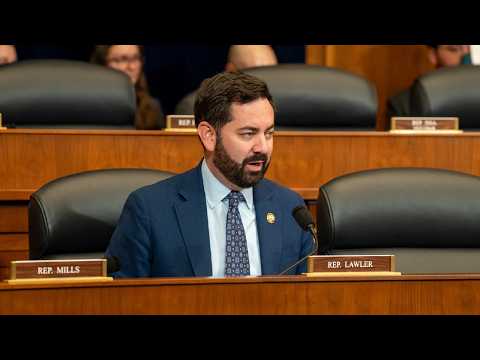
A member of the House Committee on Foreign Affairs opened a hearing saying the committee will review the Foreign Service Act and reassess the role and training of Foreign Service officers to reflect today’s challenges. “We are here today to discuss one of the most vital components of American foreign policy and national security,” the member said, framing the hearing around how diplomacy is practiced and how FSOs are prepared.
The member described Foreign Service officers, or FSOs, as the State Department’s personnel who carry out consular, economic, public diplomacy, management and political work overseas and represent U.S. interests. “Foreign Service officers frequently serve in some of the most challenging environments in the world today,” the member said, noting postings across the Middle East, in adversarial countries such as China, and in high-threat environments including Iraq and Sudan. Those assignments, the member said, often require FSOs to work apart from families and operate in rapidly evolving security contexts.
The opening statement emphasized that the Foreign Service Act, which governs how FSOs are trained and promoted and provides professional development and administrative processes, has not been substantially revised in decades. The member said the law “has largely remained untouched for the last four and a half decades” and asked how the statute should be updated now that diplomatic practice and global threats have changed since 1980.
Committee members framed the hearing as a follow-on to prior legislation that reauthorized parts of the State Department and addressed command and control structures; this session shifts focus to the department’s culture, mission clarity and statutory authorities governing FSOs. The speaker cited scale as part of the review rationale, saying the United States operates nearly 280 posts worldwide with about 14,500 Foreign Service officers serving at those posts.
The hearing will examine whether the FSA’s descriptions of duties, promotion and examination processes, and professional development programs equip FSOs with the training and tools needed to represent a cohesive U.S. stance abroad. The opening concluded by stressing the committee’s responsibility to ensure statutes and systems align with modern diplomatic demands.