Get Full Government Meeting Transcripts, Videos, & Alerts Forever!
Get email alerts on the Education Career Readiness topic
No spam. Unsubscribe anytime.
Casa Grande Union High School District task force sets measurable goals to boost college and career readiness
Summary
District leaders and community partners reviewed student performance data and set targets — including raising graduation rates and ACT math/reading scores, increasing ASVAB career scores, and improving FAFSA completion — while asking community members to join a steering committee to expand CTE and counseling supports.
Superintendent Jeff Lavender opened a task‑force meeting at Pace High School framing the goal of aligning local education with workforce needs, saying the district wants “all Casa Grande Union High School District students [to] graduate college and or career ready.”
The meeting centered on baseline data and three district goals: a measurable increase in ACT math and reading scores (target increases of 5% and 9%, respectively), raising the graduation rate from about 76% toward an 80% minimum goal (with an aspirational ceiling of 88%), and increasing the share of students meeting the district’s chosen career‑assessment threshold (district presenters proposed raising the share scoring at or above the chosen ASVAB benchmark from roughly 27% to 30%).
Why it matters: local employers including Lucid Motors and Green Bay Packaging are recruiting in the same labor pool the district is preparing. District leaders said higher postsecondary attainment and stronger CTE pathways are central both to student opportunity and to meeting employer demand.
Presenters and data: Natalie Clement, director of teaching and learning, and Monica Diaz, director of professional learning and student engagement, walked attendees through recent trends. They said reintroducing instructional rigor lowered some GPA rates but reflected more meaningful grades; AP participation and passing counts are increasing; however Algebra II pass rates remain a pinch point for seniors who cannot graduate without the course. The presenters highlighted that CTE concentrators — students completing a two‑year program of study — number roughly 250–350 per graduating class and graduate at very high rates (reported between 96% and 98%).
On assessments and supports: the district explained that all juniors are scheduled to take the ASVAB (used for career exploration and, optionally, military entrance) and that results will be interpreted for students by staff or visiting MEPS personnel. Staff said FAFSA remains important even where local colleges offer free tuition because federal aid can cover non‑tuition needs; completing FAFSA also supports the district’s state letter‑grade indicators. District counselors and partners were asked to help increase student and family completion of FAFSA and encourage use of assessment profiles in counseling conversations.
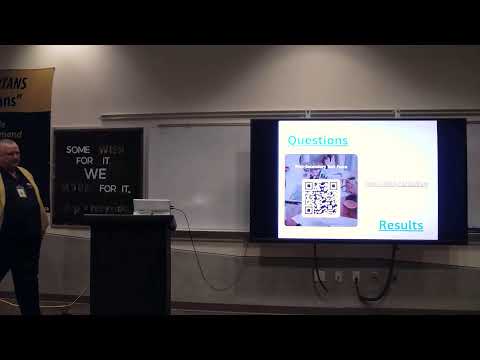
Community role and next steps: participants were asked to brainstorm practical supports in small groups and to complete a QR‑coded survey. The district requested volunteers for a steering committee and subcommittees to help expand workplace learning experiences, parent outreach events, and counselor capacity. An economic development leader urged attendees to sign up and stressed that ongoing community engagement is essential to meet workforce and student goals.
A noted legal context: presenters referenced that the district is pursuing litigation against social media companies over platform algorithms and effects on student wellbeing; that litigation was mentioned as background for why social media and student mental health are part of the district’s concerns but no legal outcome or details were presented during the meeting.
The meeting closed with instructions to submit contact information for follow‑up, a promise to share slides and survey results by email, and an invitation to join the steering committee to help implement the district’s college‑, career‑and life‑readiness goals.