Get Full Government Meeting Transcripts, Videos, & Alerts Forever!
Get email alerts on the Small Scale Housing topic
No spam. Unsubscribe anytime.
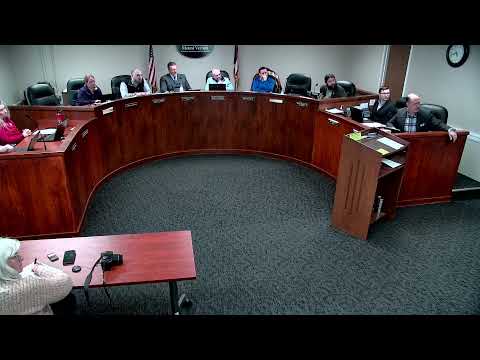
Commission approves Jackson Street small‑scale housing after neighbors raise alley, flood and parking concerns
Summary
The Mount Vernon Municipal Planning Commission approved a conditional‑use request to allow two three‑unit buildings on Jackson Street. Neighbors raised concerns about vacated alley boundaries, utility stakes on private property, floodplain elevation and parking; staff said code standards and engineering conditions will address most issues.
Bo Horde, a local property owner, told the Mount Vernon Municipal Planning Commission on March 12 that he bought three properties (five parcels) and proposes to build two three‑unit buildings on two of the parcels as a small‑scale planned housing development.
"We're trying to bring more housing into Mount Vernon," Horde said, describing previous duplex projects his team has completed and noting that FEMA paperwork for floodplain compliance is underway. He described unit mixes that include one‑ and two‑bedroom apartments and one three‑bedroom unit and said the project aims to keep rents near local averages.
Neighbors who spoke during the public comment period cited property boundary and access concerns. "They have a stake on my property. I believe I would like my property surveyed," said Paula Walton, who said she lives on Social Security and worried about the cost and implications of contested stakes. Carol McMahon and Monica Smith also told the commission the rear alley was vacated years ago and expressed concern about loss of wildlife and the change from a quiet backyard into built lots.
Planning staff explained the legal basis for review. Mrs. Blankenhorn said the code was amended in July 2024 to add small‑scale planned housing (citing Section 1105.04 and the use‑specific standards, letter C) and that the commission must apply conditional‑use review criteria in deciding whether the proposal meets neighborhood compatibility and public‑safety standards.
Engineering staff told the commission the site lies in the floodplain and recommended elevating new structures slightly so they avoid flood‑insurance triggers. "We've worked with his surveyors and doing some measurements — it's not a difficult fix," an engineering representative said, adding that sanitary sewer routing and water service connections are understood and manageable.
Commissioners pressed the applicant on stormwater and the treatment of an adjacent northern lot; Horde said he plans to leave the northern lot as green space and use limited amounts of fill to raise the building pads. Staff reiterated that any runoff caused by site preparation must be corrected by the developer and that property maintenance and nuisance complaints can be handled through code enforcement or the Mount Vernon Police Department.
After discussion the commission moved and seconded approval. A roll call vote recorded all present members voting in favor (Todd Hawkins: yes; Ellsworth: yes; Gregory Yashnik: yes; Mayor Stark: yes; Safety Service Director Sawers: yes), and the conditional‑use request (2026 MPC08) was approved. The approval is a conditional‑use finding tied to the proposed development and carries the code‑imposed conditions discussed at the hearing.