Get Full Government Meeting Transcripts, Videos, & Alerts Forever!
Get email alerts on the School Operations topic
No spam. Unsubscribe anytime.
Wake County facilities staff report steady bus deliveries, staffing gaps and tight maintenance budgets
Summary
Operations staff told the facilities committee that bus-driver recruitment is holding steady and 40 new buses have been delivered or are incoming, but the district still has 19 of 67 mechanic positions open and limited contracted maintenance dollars, prompting prioritization of high-dollar repairs and possible use of temporary chillers.
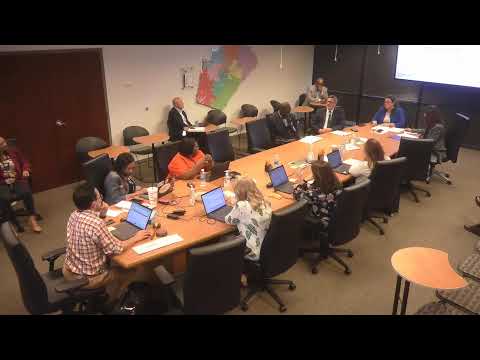
Dr. A., vice chair of the facilities committee, called the meeting to order and introduced an operations update from Mark Strickland.
Mark Strickland reported that driver recruitment “remains strong,” that 31 new buses arrived last week, nine more were expected this week and 30 additional replacement buses will arrive by the end of April, 10 of which are propane-powered. He said propane buses pose fueling challenges but are easier to service than diesel and have a good track record.
Strickland said the district currently has 19 of 67 open mechanic positions and that pay competition with other public and private employers remains a recruitment barrier. “If we were competitive, I believe we'd have people beating down our door,” he said, noting that a forthcoming compensation and salary study should provide comparative data.
On fuel costs, Strickland said the district has enough fuel to last through April and that staff plan a strategic realignment of existing appropriated funds to purchase additional fuel for the remainder of the school year; that realignment is scheduled to appear on the board agenda.
On building systems, Strickland said the district is transitioning from heating to cooling season and that most repair work is being done by in‑house staff because contracted maintenance funds are limited. He described prioritizing “high-dollar” repairs and installing piping in new facilities so temporary chillers can be plugged in later if needed.
Board members followed with questions about preventive maintenance and inspections. Strickland said contracts for preventive maintenance exist but are not funded at the desired level and that the administration will propose an increase to those contracts on the upcoming agenda. He also said some two‑pipe HVAC systems remain in older schools but new construction is moving toward four‑pipe systems where feasible.
The committee asked for a future breakdown of vacant positions by school and department; Strickland agreed to provide a staffing tally for transportation and maintenance at a later meeting.
The committee then moved to its next agenda items.
The meeting adjourned after receiving the operations update.