Get Full Government Meeting Transcripts, Videos, & Alerts Forever!
Get email alerts on the School Closures topic
No spam. Unsubscribe anytime.
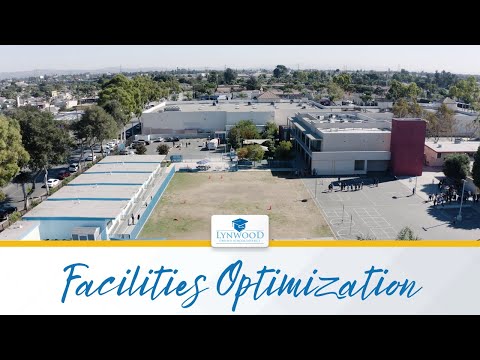
Committee weighs consolidation of Wilson and Lugo elementary schools, recommends further study
Summary
The Lynwood Unified School Facility Optimization Committee reviewed demographic, capacity and walk-distance maps and recommended studying consolidation of Wilson and Lugo (and possibly a third campus). Parents raised concerns about program continuity, staff impacts and Prop 39 charter rights for Rosa Parks campus.
The Lynwood Unified School Facility Optimization Committee on a recent afternoon recommended the committee and staff pursue formal study of consolidating two elementary campuses — Wilson and Lugo — and to consider a possible third site, the committee agreed during group breakouts and reporting.
Joe Pandalfa, facilitator with Total School Solutions, presented maps and slides showing building-condition ratings, school enrollment and geocoded student residences. "We want to basically hear from you and get some opinions," Pandalfa said in opening remarks, and later summarized the committee's earlier finding that some campuses are candidates for deeper review. He noted the committee previously "reached consensus to move Hosler Middle School to the current Lynwood High School campus" once the new high school is built.
Why it matters: District staff and consultants said consolidation could free limited bond dollars for long-term investment at a smaller set of campuses, avoid repeated repairs to facilities that may be taken off-line, and reduce the number of combination classes that commonly appear at very small sites. Gretchen Jansen, assistant superintendent for business services, described Rosa Parks Elementary's condition: "the asphalt has cracks that have been identified two years in a row," and portables are "far beyond their useful life," which contributed to its 'poor' rating.
What the data showed: Presenters used scatter-plot maps that place a dot for each elementary student residence to evaluate walk distances and receiving-school capacity. Lincoln Elementary was listed with 323 students and a northwest cluster beyond a reasonable 15–20 minute walk; Lugo was described as the district's smallest campus (271 students) but many Lugo students nonetheless live within a 15-minute walk of neighboring schools; combined enrollment for Rosa Parks and Wilson was presented as 736, with surrounding schools showing excess capacity that could absorb students in some scenarios.
Committee recommendations and rationale: After a 30-minute breakout, the three reporting groups converged on similar priorities. One group said Lincoln would be "too much of a disservice to students to close" because many children would face walks over 20 minutes; multiple groups recommended Wilson and Lugo as primary candidates because both are in poor condition, lack kitchens, and have lower enrollments, making reassignment to nearby sites feasible. A member summarized Group 3's ranking: "Wilson Elementary would be the top school for consolidation because of the poor building overall and the fact that they didn't have a kitchen."
Charter campus and Prop 39 questions: Committee members asked whether a charter already on part of the Rosa Parks campus would automatically expand if the district closed the campus. Staff cautioned it is not automatic. One staff explanation about the legal framework said the district must follow Prop 39 procedures, including a formal request and feasibility projections; a time-limited facilities agreement the district currently has with the charter complicates immediate repurposing. Because the transcript did not attribute the full legal explanation to a single named official, the committee record notes that charter expansion would require a request and negotiations rather than being unconditional.
Community concerns: Parents and staff raised concerns about disrupting students, the risk families could leave the district, and the livelihoods of staff. Several speakers emphasized trust and outreach: principals and enrollment staff said they would conduct principal-led engagement and detailed outreach beginning immediately if the board approves a recommendation. "Trust is earned," one committee member said, urging early, transparent communication and planning to minimize combination classes and reduce churn.
Process and timeline: Staff clarified the committee provides advisory recommendations; the Lynwood Unified School Board will take any formal action. If a consolidation recommendation is approved, staff said boundary redrawing, family outreach and program placement would begin in January, with the goal of implementing changes for the 2026–27 school year. The committee scheduled a follow-up meeting for October 14 to try to reach consensus before presenting a recommendation to the board.
Next steps: The committee will refine candidate lists, examine remaining metrics and attempt to form a formal recommendation at the next meeting. Any board action will be public and could preserve the status quo if the board declines the committee's recommendation.
Ending: The meeting ended after group reports and questions; livestream was stopped and the committee adjourned.