Get Full Government Meeting Transcripts, Videos, & Alerts Forever!
Get email alerts on the Measure W And Community Center topic
No spam. Unsubscribe anytime.
Finance Advisory Committee hears Measure W revenue update and next steps for community center financing
Summary
City staff told the Finance Advisory Committee that Measure W revenues are tracking below the $5 million ceiling but are expected to exceed $4.5 million; members reviewed park maintenance under DRD, a recently completed feasibility study for a community center, and directed staff to return with financing options and an RFP for consultants.
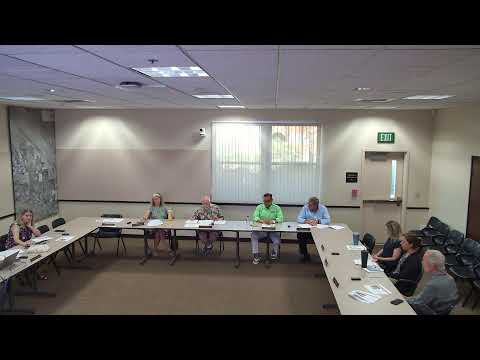
City staff told the Cathedral City Finance Advisory Committee on March 23 that Measure W revenue is likely to fall short of the $5 million ceiling but should exceed the $4.5 million estimate, and presented early-year expenditures across the measure’s five spending pillars — roads, parks, recreation, fire and debt service for a future recreation facility.
The update was given during the committee’s regular meeting, where staff explained the city receives sales and use tax receipts two months in arrears. “We should achieve that 4.5 million, if not more,” a staff presenter said, while also cautioning that reaching the full $5 million would be “a stretch.” The committee unanimously approved routine minutes from its Sept. 22, 2025 meeting before moving into the presentation.
Why it matters: Measure W is the voter-approved local use tax dedicated to a set of city priorities. Early-year revenue and spending patterns influence whether the city will build reserves, proceed with a financed recreation facility or alter allocations among roads, parks and public safety.
Staff showed a two-pronged picture: modest shortfalls in year-to-date sales tax but higher use-tax receipts tied to large purchases, and a spending profile shaped by contracts and one-time capital costs. For roads, staff said completed 2025–26 work included grinding and slurry sealing in the Panorama neighborhood and a full reconstruction of Quota and Elsita; future projects were listed through 2029–30. Regarding parks, staff described the transition to DRD (the contracted parks operator) and said DRD’s initial annual proposal for park maintenance and programming came in at about $1.45 million; staff reported roughly $686,000 charged in the initial months and said they expect a learning curve with possible year-end costs closer to $1.2 million for the second half of the fiscal year.
On public safety and capital, staff noted a prior purchase of an ambulance and a $45,000 carryover for the fire department. Staff also warned that some support costs for the fire department had been funded from the general fund rather than Measure W, and that the city will perform a year-end reconciliation to ensure appropriations align with the measure’s five pillars.
Community center feasibility and financing: The committee received a summary of a feasibility study prepared by Group 4 Architecture Research and accepted by the City Council in February. Staff listed four council-priority sites: the city-owned library site adjacent to the Big League Dreams complex, a 3.5-acre city parcel next to the Salvation Army, and two 1.1-acre city-owned ‘bowling alley’ lots; staff also discussed privately owned vacant buildings (the former Walmart and Burlington sites) as higher-cost options. Staff noted the feasibility study examined about nine candidate sites and evaluated cost, connectivity, and potential for renovation versus new construction.
“Those vacant buildings would be very expensive to develop,” a staff presenter said, citing published listings near $10–12 million, and suggested the library site scores well because it is city-owned and adjacent to park space, though parking constraints at Big League Dreams would need resolution.
Staff told the committee the next steps are an RFP for financial consultants to analyze bond and alternate financing structures; staff said the city has roughly $1 million of annual debt-service capacity in preliminary planning and retains other funding pools such as impact fees. Staff also described how the city plans to set aside any Measure W surplus into a Measure W subfund reserve that could be used for debt service or toward a community center.
Taxes and revenue context: As an educational briefing, staff reviewed potential voter-approved local tax options down the road — a district sales/use tax up to a 2% ceiling (the city currently levies 1.5%), increases to the transient occupancy tax, and utility users taxes — and provided rough revenue estimates: a 0.5% district tax could yield several million dollars annually; the city’s 12% occupancy tax currently produces about $4 million a year and a one-point occupancy increase would generate less than $400,000 at existing volumes; a 1% utility-users tax would produce roughly $1.3–1.4 million depending on weather and consumption.
On short-term trends, staff said year‑to‑date sales-tax comparisons showed a modest decline versus last year (roughly $130,000–$140,000) while use-tax receipts rose by about $40,000, and cited third‑party tourism data indicating fewer Canadian visitors but an approximately 8.5% increase in visitors from Mexico.
Committee process and follow-up: Committee members discussed attendance reporting and requested a standing agenda item to collect committee suggestions for revenue-generating ideas; staff agreed to add that item to the next agenda and explained the process for agendizing items through the liaison, Mr. Beersack, and the city clerk’s office. Staff said they will return to the committee, likely in early to mid‑June after the next CDTFA true‑up, with an updated Measure W revenue report and the results of any consultant work on financing options.
Votes and formal actions: The only formal action at the meeting was the unanimous approval of the Sept. 22, 2025 minutes (motion by Committee member Bashew, second by Committee member Hargraves).
What’s next: Staff will publish the Group 4 final report to the committee and proceed with an RFP process for financial consultants to evaluate bond and alternate financing options; the committee expects another revenue update after the CDTFA true‑up in late May/early June when monthly estimates become clearer.