Get Full Government Meeting Transcripts, Videos, & Alerts Forever!
Get email alerts on the Land Use Development topic
No spam. Unsubscribe anytime.
Sweetwater workshop leaves key park and valuation terms unresolved for Flaggl er Center master agreement
Summary
At a City of Sweetwater workshop on April 2, 2020, officials and the developer negotiated parkland, appraisal and financing terms tied to a proposed 104‑acre Flaggl er Center District. The meeting produced a plan for a follow‑up workshop and possible deferment of second reading while valuation, impact‑fee credits and transportation responsibilities are finalized.
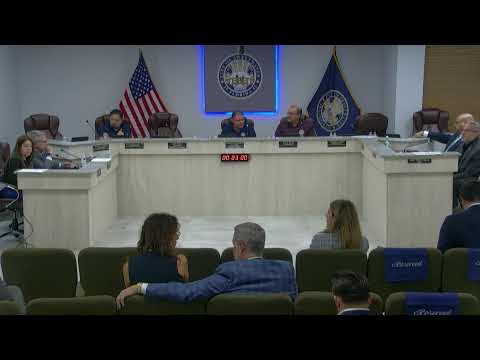
A City of Sweetwater workshop on April 2, 2020, brought city commissioners, staff and the developer of the proposed 104‑acre Flaggler Center District together to work through outstanding terms in the master development agreement, but left park valuation and financing unsettled.
The applicant’s representative, Alejandra Adios, described the project as a roughly $4.5 billion mixed‑use development with about 6,000 residential units, 2.2 million square feet of commercial space, a 250‑room hotel and a 1,200‑person convention center. "This will serve to generate over 28.7 million in annual city revenue upon full buildout of the project," Adios said during her presentation as she reviewed the changes in the most recent iteration of the draft MDA.
Project proponents and staff also identified public benefits the developer has offered, including reservation of 100,000 square feet for potential municipal use, right‑of‑way upgrades including work on 112th Avenue and a new bridge, and between two and seven acres of contiguous parkland with a minimum two‑acre commitment.
Much of the workshop centered on the mechanics of acquiring and valuing parkland and how the city would pay for it. Planning staff explained the city’s level‑of‑service formula (1.45 acres per 1,000 residents) and said the projected population for the full development implied roughly 23 acres of parkland under the comp plan; staff calculated a monetary concurrency equivalent of about $6.25 million if no land is provided.
Property owner Raul Rodriguez told the commission he was willing to craft financing options to avoid an up‑front purchase. He described a seller‑finance approach that would allow the city to "purchase an acre a year" with interest‑only payments initially and a balloon payment later, rather than a single large lump‑sum purchase. "You do not have the money to pay for the land," Rodriguez said, explaining his proposal was intended to give the city time to assemble credits and other revenues.
City finance staff pushed back on risk and timing, noting that impact fees and tax revenue from the development will accrue over many years. Scott Mendlesburg, the city’s finance director, said the project could take decades to finish and urged the commission to secure public benefits while avoiding commitments that could jeopardize the city’s finances.
A separate debate focused on how the land should be appraised. The developer urged consideration of state law (SB 102) and post‑rezoning highest‑and‑best‑use factors when instructing appraisers, while city staff emphasized valuing land consistent with municipal code and seeking caps to limit long‑term exposure. Commissioners discussed setting a cap in the agreement and using independent appraisals to reconcile differences.
Transportation obligations also surfaced as a material negotiation point. City and applicant presentations listed a significant slate of off‑site and on‑site roadway and intersection improvements (the developer cited roughly $43 million of infrastructure work in presentations) and commissioners pressed staff to nail down which improvements are eligible for developer credit and the timing for construction so certificate‑of‑occupancy deadlines do not outpace road completion.
No formal actions or votes were taken at the workshop. Commissioners said they needed more time to review materials that were delivered shortly before the meeting and asked administration to schedule another public workshop to review a final draft of the MDA and related exhibits. The mayor and counsel agreed the commission could defer the second reading if necessary; the administration committed to circulating final documents and proposing a date certain for continued public consideration.
The workshop also surfaced ancillary regulatory matters tied to the MDA: noise and alcohol‑service rules for the new district. Staff reported they have drafted a sound ordinance to address commercial and residential adjacency concerns and said the council could consider reasonable hour limits and a case‑by‑case permitting path for special events. Commissioners signaled a preference to limit late‑night alcohol sales and to treat noise control as a codified standard.
The next steps are procedural and substantive: staff and the applicant will finalize appraisal instructions and park‑valuation language, clarify the use of impact‑fee credits toward park acquisition, and reconcile the transportation improvement schedule and crediting. A follow‑up workshop will be scheduled so the commission can consider a revised MDA and decide whether to proceed to second reading or defer to a later date.