Get Full Government Meeting Transcripts, Videos, & Alerts Forever!
Get email alerts on the Criminal Justice topic
No spam. Unsubscribe anytime.
Monroe County prosecutor candidates clash on priorities, adult protective services and cannabis prosecutions
Summary
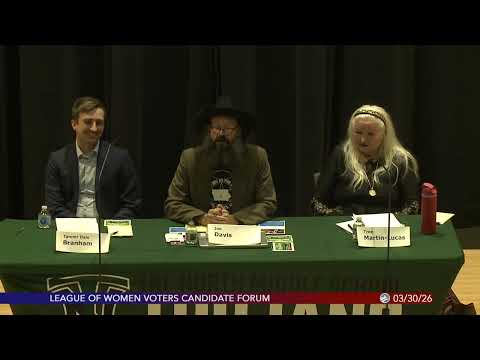
At a League of Women Voters forum, incumbent Erica Olant defended focusing resources on repeat and violent offenders and promised a public data dashboard; challenger Benjamin T. Arrington emphasized prioritizing violent crime but said he would decline prosecuting simple marijuana possession and join a national non‑prosecution pledge.
Two Democrats competing in the Monroe County prosecuting attorney primary debated how to prioritize trials, protect victims and respond to recent state policy changes.
Erica Olant, the incumbent, told the forum she prioritizes trials for the most serious crimes — homicides and child‑molestation cases — and described a mix of trial work and diversion programs for less serious offenses. She flagged a recent state reorganization of adult protective services that moved the work from local prosecutor offices into regional contracts and said she is "gravely concerned" that contracted providers do not have in‑house attorneys and that endangered adults may receive less personal investigative follow‑up.
Challenger Benjamin T. Arrington said the office must be 'tough' on violent crime but also advocated declining prosecutions for simple marijuana possession; he said he would sign a national pledge not to prosecute certain medical providers and patients. Arrington criticized what he described as failures in the current office to meet deadlines and protect victims from case dismissals, saying victims were sometimes denied their 'day in court.' Olant pushed back that case outcomes reflect shared responsibility among courts, defense counsel and prosecutors and pointed to recent convictions she said demonstrate the office's trial capacity.
Both candidates discussed victim services and court coordination. Olant noted the prosecutor's office increased victim‑assistance staff (now four victim assistants using VOCA funding) and participates in domestic‑violence coalition work and diversion efforts with community partners. She also said the office applied for and received an Indiana Prosecuting Attorneys Council grant to establish a High‑Tech Crime Unit to process digital forensics (phones, laptops) and to work with Indiana task forces on internet crimes against children.
On transparency and ethics, Olant said deputy attorneys receive ethics training and that the office plans to publish a public data dashboard with filing and disposition statistics; Arrington said he intends to lead as an executive and clear policy priorities while bringing in experienced deputies to handle trial teams.
Context and next steps: Candidates diverge on discretionary prosecution of low‑level drug possession and on how to respond to the state's consolidation of adult protective services. Voters will face these choices in the upcoming primary; the forum closed with a reminder of the primary date and early‑voting schedule.