Get Full Government Meeting Transcripts, Videos, & Alerts Forever!
Get email alerts on the Temporary Protection Zones topic
No spam. Unsubscribe anytime.
ACLU and environmental groups warn of civil-rights and access risks as committee advances temporary protection-zone authority
Summary
An ACLU witness and the Sierra Club told the Judiciary C committee that a bill authorizing 72-hour temporary protection zones lacks sufficient notice, interagency coordination and explicit protections for private-property and Fourth Amendment rights; sponsors said the tool is narrowly aimed at public safety and mirrored in other states.
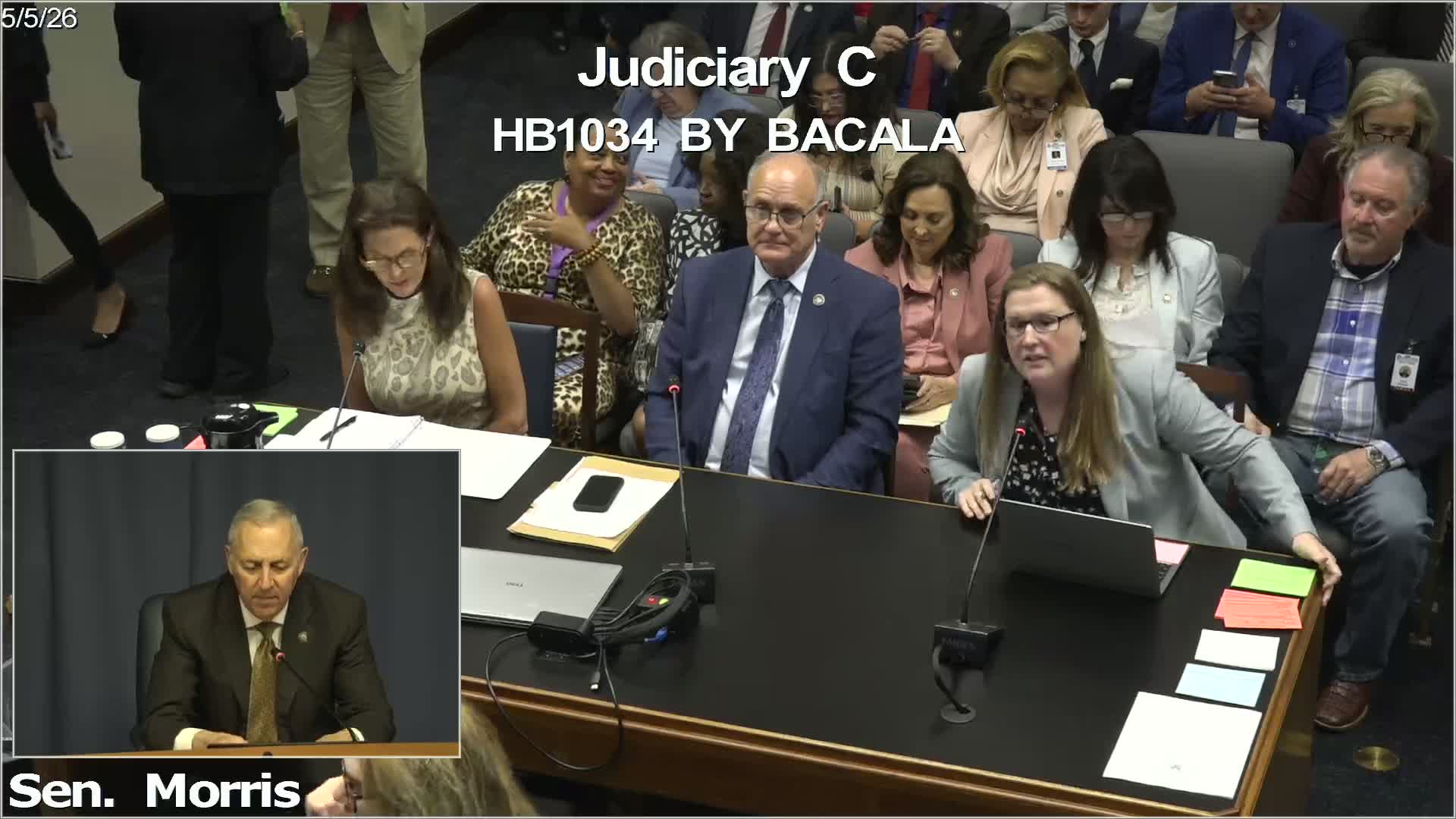
The Judiciary C committee's discussion of temporary protection zones drew detailed opposition testimony March 5 from Sarah Whittington of the ACLU and written remarks from Peter Robbins Brown of the Sierra Club Delta chapter.
Whittington said the bill as initially filed contained no guardrails limiting zones to aerospace or similar narrow uses and that the only places she found comparable language in existing law were declarations of emergency or disaster. She told the committee the draft lacks clear requirements for prompt notice to affected agencies (for example, DOTD or the Coast Guard) and urged explicit statutory language protecting private-property rights and Fourth Amendment safeguards against unwarranted searches or seizures.
The Sierra Club witness warned that broadening critical-infrastructure lists and giving local officials broad exclusion authority risks overuse of the tool and could chill protests or the public's normal use of wetlands and waterways. He raised the possibility that the statute's language could be read to include routine infrastructure such as wireless towers.
Sponsors and Secretary Susan Bourgeois said the bills are intended as narrow public-safety tools and that local officials would be responsible for practical outreach and posting; they stressed the bills require a written proclamation, public dissemination and filing with the clerk of court. The sponsor assured the committee enforcement normally requires that people be "advised" of the zone before being subject to penalties.
Committee members pressed for practical examples of notice and asked whether state agencies would be looped in for highway or waterway impacts; sponsors said local officials would coordinate with the appropriate authorities but that LED's role is limited to economic development.
The committee ultimately reported the measure favorably; members said they expect technical fixes before floor action to tighten notice protocols and protections.