Get Full Government Meeting Transcripts, Videos, & Alerts Forever!
Get email alerts on the Urban Forestry topic
No spam. Unsubscribe anytime.
Bakersfield officials outline new tree‑management steps after advisory group review
Summary
City staff and a newly formed Tree Advisory Group described steps to reduce harmful trimming during nesting season, to expand planting in underserved neighborhoods, and to develop a comprehensive tree inventory; residents pressed for transparency, sustained funding and an enforceable tree‑replacement practice.
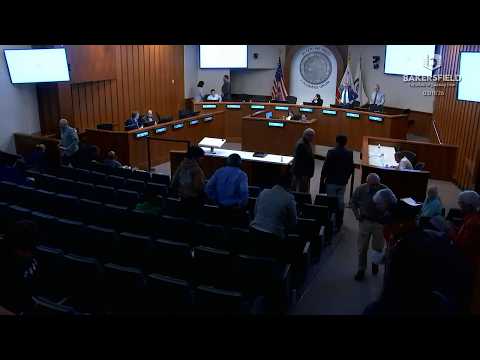
Mayor Karen K. Go and city staff on March 11 received an update from the Tree Advisory Group on a year of work to change how Bakersfield trims, removes and plants urban trees.
The advisory group’s priorities include a five‑to‑six‑year trimming cycle (with year‑round safety trimming as needed), a recommended city tree list posted in December 2025, more arborist oversight of removals, and a planned inventory modeled on Fresno’s program. Ray Sllayton, the city arborist, told the council the city paused its previous contractor in March 2025 and restructured oversight; “we reduced [trimming during the nesting season] from 9,474 trees in 2024 to 173 palms in 2025,” he said, describing how the city now documents removals and requires TRACK‑qualified reviews for trees slated for removal.
Why it matters: Council and residents said the work affects air quality, heat islands and public safety in neighborhoods that have among the region’s highest pollution burdens. Abby Power, a policy advocate with the Leadership Counsel for Justice and Accountability, urged the council to use the general plan update to ensure AB98‑style landscaping and to target tree canopy increases where diesel and ozone exposure are highest.
Public concerns and staff response
Several public speakers, including Sierra Club member Eddie Lane and neighborhood advocates, pressed for clearer records and monthly cost and trimming reports. Lane provided a list of invoices he said show removals and trimming outside the recommended window and urged more transparency; Sharon Briel urged the council to match tree plantings to neighborhoods with the greatest pollution burden rather than plant without clear criteria.
City staff acknowledged both progress and outstanding questions. Keith Howell, Parks and Recreation assistant director, said the city has planted more trees each year and received a $150,000 council allocation for the spring 2026 planting (staff estimated about 600 trees for the upcoming planting season). He said the city is working to prioritize underserved wards and to place the right tree in the right location to improve survival rates. City staff also said they are rethinking how to accomplish the TAG inventory after council feedback.
Inventory, technology and funding
TAG recommended a comprehensive, data‑rich inventory capturing species, diameter, height, risk assessment and canopy coverage. Staff said a contractor’s inventory would integrate with the city’s GIS layers; the city manager’s office also said staff are evaluating standalone software options that would allow field crews to update inventories in near‑real time. Several TAG members and university partners said a robust inventory is essential to scheduling maintenance, avoiding monocultures and reducing liability risks from hazardous trees.
Next steps and council direction
Council members generally praised TAG’s work and urged faster progress on a living inventory and on durable funding. Vice Mayor Core asked staff to evaluate tree‑inventory software options and to return with recommendations; several council members asked staff to use priority indices to direct plantings to wards with the lowest canopy. Council received the report and directed staff to keep working with TAG and partners to implement the recommendations.
Quote: “We want to plant trees in underserved communities, but if there's no water infrastructure the trees won’t live,” City Arborist Ray Sllayton told the council, underlining that planting choices must match local conditions.
What’s next: Staff said they will continue planting this spring and will return with more detailed proposals on inventory options, funding needs and policy levers to protect and replace city trees.