Get Full Government Meeting Transcripts, Videos, & Alerts Forever!
Get email alerts on the Special Education topic
No spam. Unsubscribe anytime.
Torrance Unified outlines rollout of state'authorized alternative diploma pathway for students with significant disabilities
Summary
Board presenters described the state'authorized alternative diploma pathway (Ed. Code 51255.31) that will allow about 90 Torrance Unified students with the most significant cognitive disabilities to earn a standard-looking diploma while retaining access to adult transition services through age 22.
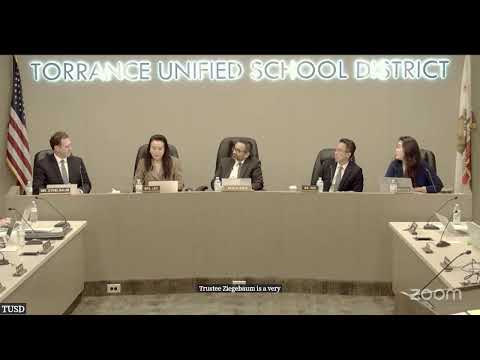
The Torrance Unified School District board received a detailed presentation on a new state alternative pathway to a high school diploma intended for students with the most significant cognitive disabilities.
District officials said the pathway, authorized by Education Code 51255.31, allows eligible students who take the California Alternate Assessment to earn a diploma that appears the same as a general-education diploma. The district estimates about 90 students across its extensive needs programs could qualify; staff described programs at South High, West High and a regional health-support site at North High.
"This is an opportunity for our students with the most significant cognitive disabilities to actually earn a high school diploma much like your general education student," the presenter said, describing course requirements and the IEP-based eligibility rubric. Staff said the alternate pathway uses a standards-aligned curriculum at foundational levels and requires a minimum set of courses (about 13 state-required course elements under the pathway) while preserving flexibility for individualized pacing.
Why it matters: district staff emphasized the practical benefits for graduates. Students earning the diploma may be eligible for federal financial aid and certain postsecondary transition programs, have broader employment opportunities, and meet enlistment requirements for military service. Staff also noted that pathway graduates remain eligible for the district'run adult transition program and for services through age 22.
Board members asked how current juniors and students already in high school would be accommodated; staff said the district will review prior coursework and award credit where State Common Core-aligned content has already been met so many current juniors should be able to graduate within the next school year or transition into the adult program if needed.
Implementation steps described included teacher and administrator training, annual parent meetings (recorded and posted), updates to the course catalog and PowerSchool, and continued professional development for pathway teachers. Staff said classrooms are sized to keep extensive-support classes small (roughly 12 students per class) and outlined current enrollment by site as approximate counts: North ~10, West ~36 and South ~45 students in extensive-support tracks.
The board later approved the consent calendar items that include the course approvals necessary to launch the pathway (consent item approval was recorded in the meeting's consent vote). District staff said outreach and recorded presentations have been completed for eligible families and that annual follow-up outreach will continue.
The district indicated the program rollout will be iterative: course descriptions and scheduling will be updated, and students who cannot finish within four years may complete remaining requirements in the adult transition program before receiving a diploma.