Get Full Government Meeting Transcripts, Videos, & Alerts Forever!
Get email alerts on the Stormwater Management topic
No spam. Unsubscribe anytime.
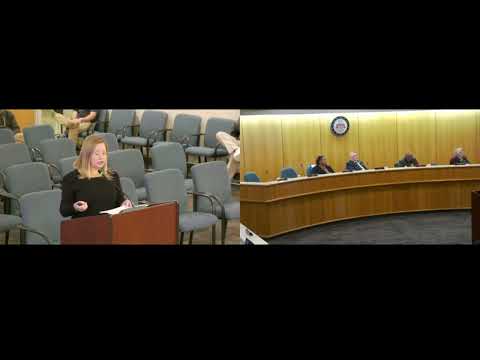
Stormwater briefing: Hope Mills staff outline NPDES requirements, master plan and project funding needs
Summary
Stormwater administrator Beth Brown told the Hope Mills Board the town’s phase II NPDES permit and a June 2025 master plan guide work on water-quality projects, inspections and outreach; major projects typically exceed $1 million and staff are building a reserve before starting larger capital work.
Beth Brown, Hope Mills stormwater administrator, told the town board at the May special meeting that the municipal program focuses on water quality under the National Pollutant Discharge Elimination System (NPDES) and is distinct from sanitary sewer or flood-control work.
Brown summarized the regulatory framework that traces to the Clean Water Act and the town’s phase II NPDES permit (issued in 2006). The permit requires a five-year implementation cycle and six “minimum control measures”: public education and outreach; public involvement; illicit-discharge detection and elimination; construction-site runoff controls; post-construction runoff controls; and municipal good housekeeping.
Why it matters: untreated stormwater runoff flows directly to local streams and can carry pollutants from cars, lawn care, pet waste and trash. Brown said the department conducts quarterly baseline sampling to track water quality trends and inspects outfalls to detect illicit discharges; the town’s target is to inspect roughly 75% of outfalls.
Brown described the town’s outreach programs — an adopt-a-drain sign-up, household hazardous-waste and shred events, workshops and school outreach — and said the department partners with communications contractors to distribute materials. For construction oversight, Brown said the state-managed erosion-and-sediment control program handles most construction-site enforcement today; the town’s post-construction ordinance requires treatment on-site for developments above size thresholds (residential projects over 1 acre; commercial projects over 0.5 acre).
On planning and costs, Brown described the town’s stormwater master plan, originally completed in 2011 and updated in June 2025, which lists flooding locations, undersized piping, stream-stabilization and water-quality projects. She said most projects on the current list carry multi-hundred-thousand- to million-dollar cost estimates; staff have prioritized adding money to a stormwater reserve to fund one of the larger projects without financing or to respond to an infrastructure failure.
During a question-and-answer sequence, Brown explained inspection techniques (such as smoke testing to find sanitary-sewer leaks) and walked the board through examples of stormwater violations versus acceptable discharges (emergency firefighting flows and broken water lines are not treated as violations). She asked board members to refer constituent stormwater complaints to Town Manager McGlaughlin so staff can triage and respond, and requested support for ordinance changes the department brings forward when state rules change or gaps are found.
The presentation closed with an update that recent maintenance repairs have cost tens of thousands of dollars, Woodland Hills work is nearing finalization and staff are planning a walking-trail design that must align with other scheduling constraints.
Brown’s on-the-record explanations and the master-plan update give board members a factual foundation for upcoming budget decisions and any ordinance amendments staff will propose. The board recessed to the regular meeting after the presentation.