Get Full Government Meeting Transcripts, Videos, & Alerts Forever!
Get email alerts on the Wastewater Testing topic
No spam. Unsubscribe anytime.
Fairfax County lab monitors 260 contaminants, tracks nutrients and E. coli
Summary
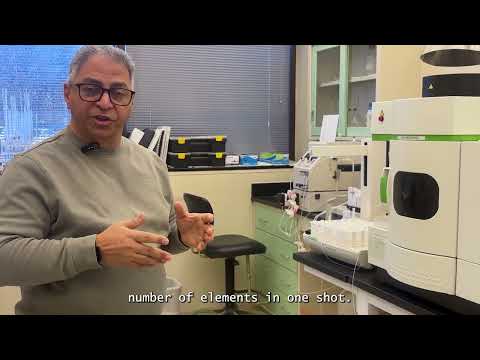
A narrated tour of the Norman M. Cole Water Recycling Facility in Fairfax County described how its accredited laboratory analyzes about 260 contaminants — from heavy metals to nutrients — runs daily E. coli tests to protect public health, and is partnering with the U.S. Geological Survey to monitor roughly 20 surface-water sites across the county.
A narrated tour of the Norman M. Cole Water Recycling Facility in Fairfax County described the laboratory’s scope and its role in protecting surface water and public health.
The recording said the lab is accredited to analyze about 260 contaminants ranging from ammonia and cyanide to heavy metals such as copper, chromium, cadmium, lead and arsenic. It also described daily tests for E. coli, routine nutrient monitoring (primarily nitrogen and phosphorus) and instruments that can analyze multiple inorganic elements in a single run.
The lab’s work, the tour said, is split by function: one area focuses on pollutants that affect surface water and another on heavy metals and organic pollutants. The transcript introduces Drew Ryan as an environmental technologist; the recording explains Ryan’s primary testing focus is suspended solids and notes that excessive suspended solids can block sunlight and harm aquatic life.
The recording described the facility’s operational response when higher-than-normal readings are detected: those results are reported to lab managers, who determine whether to notify the Department of Environmental Quality (DEQ). The transcript uses the acronym DEQ but does not specify which jurisdiction’s DEQ it refers to.
Staff quoted in the recording said nutrient management aims to limit algal overgrowth by keeping final effluent phosphorus and nitrogen low; the recording explains that algal die-off can deplete dissolved oxygen in surface water. It also said the lab conducts daily E. coli tests “to keep county residents safe,” framing bacterial monitoring as a public-health safeguard.
Becker, cited in the recording (role not specified in the transcript), said, “We are serving the community. I take pride in I raised my children, my family in this community, and now I'm giving back by making sure we have water that's available to be converted to drinking water and the streams that our kids and grandkids can play in.” The recording emphasized recreational and drinking-water benefits as goals of the testing program.
The tour also described a partnership with the U.S. Geological Survey to monitor about 20 surface-water samples across the county for nutrients, suspended solids and harmful bacteria, expanding the lab’s regional monitoring footprint and data collection.
The recording did not include formal votes, motions, or regulatory decisions; it presented operational practices, monitoring priorities and an interagency sampling partnership. The lab’s accreditation scope (about 260 contaminants), the named analytic targets, and the USGS collaboration were the principal factual takeaways.
Next steps described in the recording were operational and informational (ongoing testing and monitoring); no policy action, motion or regulatory finding was recorded in the transcript.