Get Full Government Meeting Transcripts, Videos, & Alerts Forever!
Get email alerts on the Licensing And Workforce topic
No spam. Unsubscribe anytime.
Committee advances plumbing workforce reforms after debate over hours, oversight and reentry provisions
Summary
The committee considered multiple plumbing-related bills and a large amendment package that adjusts hour requirements, restores plumbing-board authorities, sets penalties for violations, and adds reporting requirements on minority recruitment. Stakeholders including the State Plumbing Board clarified inspections and appeals processes; HB 953 was reported as amended and HB 827 was debated and faced a motion to defer.
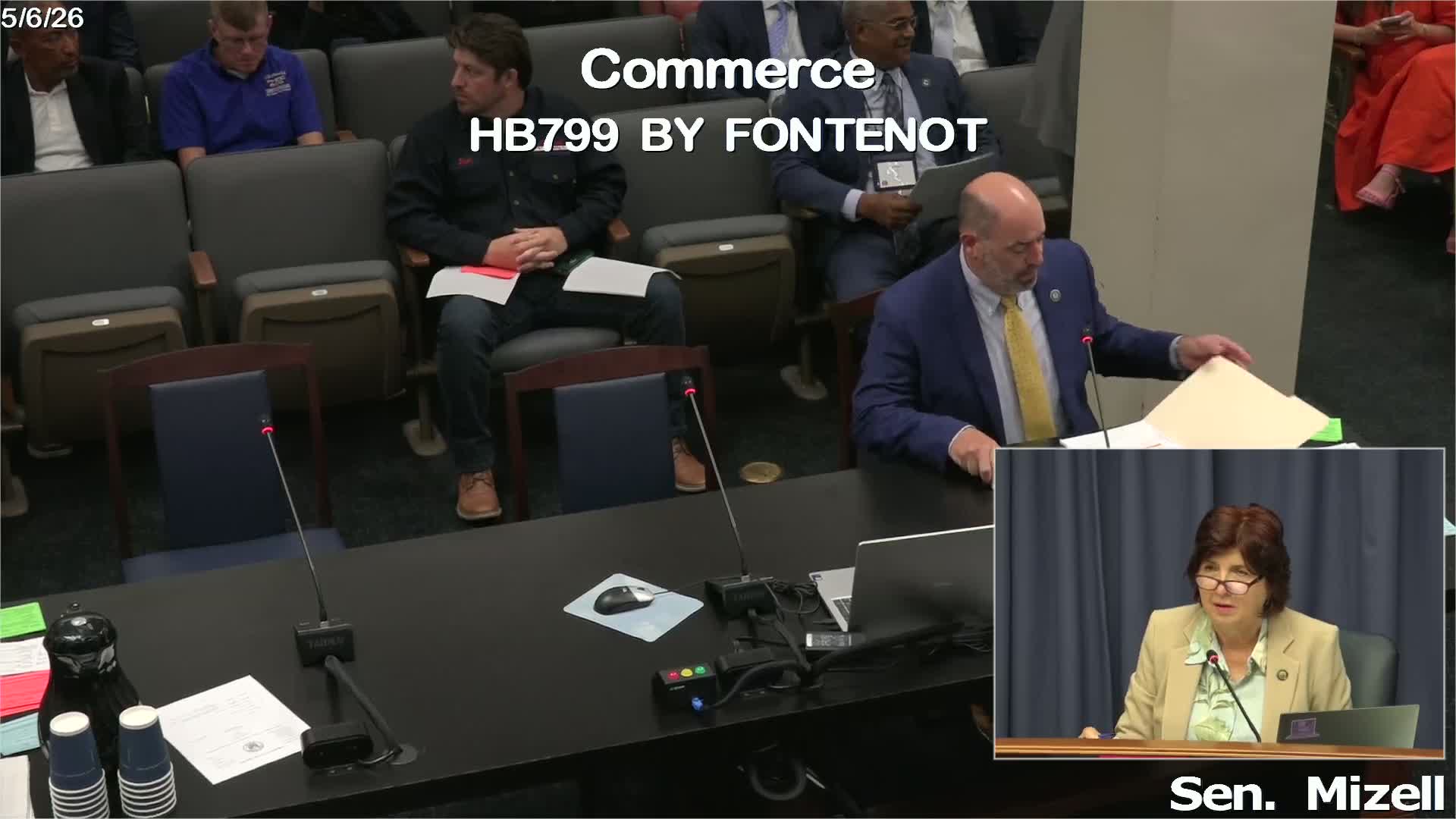
Representative Fontenot presented measures to modernize plumbing licensing pathways, telling the committee the original bill sought to let plumbers qualify via contractor-board testing but that negotiations produced a compromise reducing hour requirements and preserving consumer protections. "Currently in the state of Louisiana to become a master plumber, it is a 7000 hour requirement," Fontenot said, adding that the revised posture provides a pathway with lower hour thresholds (journeyman and master levels) and routes for training and exams.
Staff reviewed a comprehensive amendment package (amendment set 3,059) that, among other changes, replaces certain provisions that would have abolished the State Plumbing Board, restores many functions to the plumbing board, creates journeyman license pathways (examples: 2,000 indentured hours, 2,500 unindentured, or 1,000 hours plus approved training), authorizes administrative penalties ($500–$5,000 per violation), and establishes reporting requirements intended to increase minority recruitment and workforce data collection. The staff presentation also referenced specific training pathways through the Louisiana Community and Technical College System and reentry programs.
Senators asked about the number of inspectors, appeals rights, and enforcement. Fontenot said the contractors board posture would yield more inspectors statewide; the amendment as adopted restored plumbing‑board oversight in several respects. Trey Giglio of the State Plumbing Board told the committee the board is reforming its inspection process, clarified that inspectors check licensing compliance rather than job-site workmanship, and said decisions by the plumbing board can be appealed through the judicial system "just as it is at the contractor's board."
After debate and the adoption of amendment set 30 59, Senator Alon moved to report House Bill 953 as amended and the motion carried; for HB 827, Senator Kathy moved to defer and a roll-call vote was recorded in the transcript (individual member votes are in the record; the transcript does not state an explicit final tally in a single summary line).
The committee recorded a range of stakeholder positions on the bills: trade groups, unions and the Pelican Institute registered support; PHCC representatives registered opposition and spoke at the table. Next steps: HB 953 was reported as amended for floor consideration; HB 827 remains subject to further committee or floor action.