Get Full Government Meeting Transcripts, Videos, & Alerts Forever!
Get email alerts on the Enrollment And Facilities topic
No spam. Unsubscribe anytime.
Lynwood Unified committee reviews steep enrollment decline and options for facilities optimization
Summary
A Lynwood Unified facilities committee heard data showing a long-term enrollment decline, a district capacity surplus of roughly 6,000 seats, limited bond resources and program-transfer questions; committee members were asked to prioritize data-driven recommendations to present to the school board.
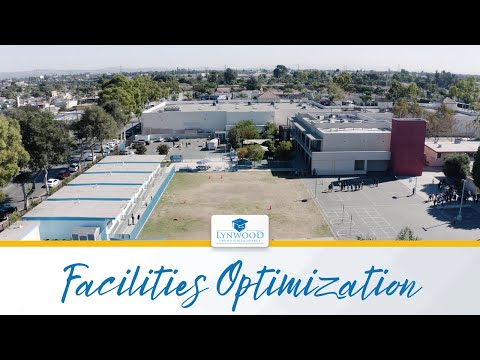
The Lynwood Unified School District's Facilities Optimization Committee convened to review enrollment trends, facility capacity and options for reorganizing sites so the district can sustain programs and improve student outcomes.
Consultant Joe Pandalfo of Toll School Solutions opened with state and county figures, saying, "California has lost 429,000 students between 2014 and 2024," and that Los Angeles County has borne a large portion of the decline. Pandalfo told the committee the decline is primarily demographic rather than district-specific and said demographers project further losses in Lynwood over the coming years.
Why it matters: Lynwood currently reports roughly 10,900 students and district capacity of about 16,670 seats, leaving roughly 6,000 unused seats. Committee members were urged to weigh program quality and equity alongside operating costs when considering any reconfiguration of campuses.
Gretchen Jansen, assistant superintendent of business services, said one driver of near-term changes is the district's decision to return special-education students from centralized "hub" campuses to their home schools. "The special education department has worked to return all the students to their home schools," she said, and noted that shift explains notable enrollment drops at Lugo, Roosevelt and Wilson and corresponding increases at other neighborhood sites.
Committee members discussed instructional and program impacts of small campus sizes, including the need for combination (multi-grade) classrooms where enrollment is too low to run a single-grade class. Consultant Pandalfo emphasized that combination classes increase teacher workload and can constrain program offerings: "When schools get small, it's harder to sustain a breadth of programs and teacher collaboration."
The group also examined financial constraints. Participants said the district's recently passed bond was modest compared with needs identified in the facilities master plan: speakers noted an $80 million bond passed recently while the district's facilities plan estimates about $250 million in needed work, forcing prioritization of projects.
Charter co-location and Prop 39 rights surfaced in the discussion. Committee members asked how empty district space affects charter applications; staff explained that under Prop 39 a district with available space must make it available to charter operators and that some historical charter approvals in the area were granted by the county office of education.
Process and next steps: The committee will use a set of metrics approved by the board (enrollment trends, facility condition, operating costs, capacity/receiving-school feasibility, special-program transferability, transportation and demographic balance) to evaluate options. The consultants outlined upcoming sessions that will examine special programs in depth, physical condition, transportation scatter plots and demographic maps. Staff said about 400 survey responses have been collected and additional community input will be posted to the district website.
No formal decisions were taken at the meeting; committee members were asked to prepare data-driven recommendations for future meetings and for eventual presentation to the school board, which holds final authority over any closures or reconfigurations.