Get Full Government Meeting Transcripts, Videos, & Alerts Forever!
Get email alerts on the Spaceport topic
No spam. Unsubscribe anytime.
Alaska Aerospace details Kodiak expansion, job impacts and tax, road and spill concerns
Summary
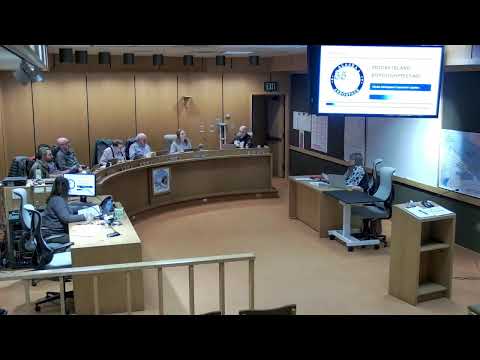
At a Feb. 26 Kodiak Island Borough work session, Alaska Aerospace General Manager Robert Green described plans to revive payload-processing facilities, expand operations that support roughly 50–53 local jobs and outlined logistics, tax and environmental mitigation questions raised by assembly members.
Robert Green, general manager of Alaska Aerospace Corporation, outlined the Pacific Spaceport Complex–Alaska’s operations and near-term plans at the Kodiak Island Borough Assembly work session on Feb. 26.
Green told the assembly that since the spaceport began operations in 1998 the corporation has generated “about $600 million worth of work and income” for Alaska and directly supports roughly 50–53 jobs on Kodiak. He said the port averages one to three launches a year from Kodiak and also deploys personnel and instrumentation to support launches overseas.
The presentation described the site layout (LP1–LP3 and Area 3 commercial pads), launch control and instrumentation fields and a previously dormant payload processing facility the corporation plans to restore. "The payload processing facility has been dormant for about 15 years," Green said, and reviving it could capture west-coast processing work because Vandenberg facilities are booked for years.
Assembly members pressed Green on practical constraints and community impacts. On road access, Green said the switchback near “Pad Shack” is a primary logistical bottleneck for large vehicles and heavier government-class rockets; Alaska Aerospace has funded a preliminary realignment design and is coordinating with the state Department of Transportation to complete full design work and cost-sharing.
On the question of property taxes and disclosures, an assembly member asked whether private customer equipment stored on state land is being reported to the assessor. Green said the state owns the land and Alaska Aerospace signs user agreements with customers rather than leases under its ADNR arrangements: "If a customer comes up, they sign a reservation. They get onto a pad. They don't own the pad," he said, adding that the corporation had taken no state funding since 2014 and operates largely on contract revenues. He described prior discussions about payments-in-lieu-of-taxes (PILT) and clarified a large federal "spaceport enhancements" grant would be split with another state spaceport.
Environmental concerns also arose. When asked about a past fuel release near a launch pad and the risk to subsistence resources, Green said recent anomalies affected land but not water, that the borough and the corporation had worked with DEC and EPA requirements, and that future pads will include membranes and other containment measures to limit migration: "We're building out membrane under the whole pad…so if there's any type of a spill, it'll go down about 18 in and then it's going to have a membrane," he said.
Green said the corporation would continue community coordination—road-closure notifications, fishing-community outreach and attempts to schedule launches outside major fisheries windows—and invited assembly members to tour the site. He also said the corporation's new CEO plans to attend a future assembly meeting for further discussion.
The assembly did not take formal action on the presentation; members requested follow-up on tax-disclosure practices and continued coordination on road improvements and environmental monitoring.