Get Full Government Meeting Transcripts, Videos, & Alerts Forever!
Get email alerts on the Disability Services topic
No spam. Unsubscribe anytime.
Providers, disabled residents urge Senate to fund LRS and waiver services to unlock federal match
Summary
Multiple people with disabilities, family members and provider organizations told the Senate Finance Committee that underfunding Louisiana Rehabilitation Services and waiver programs is producing service delays, staff turnover and wait lists; providers asked the Senate to add millions in state funds to secure federal matching dollars and raise direct‑support wages.
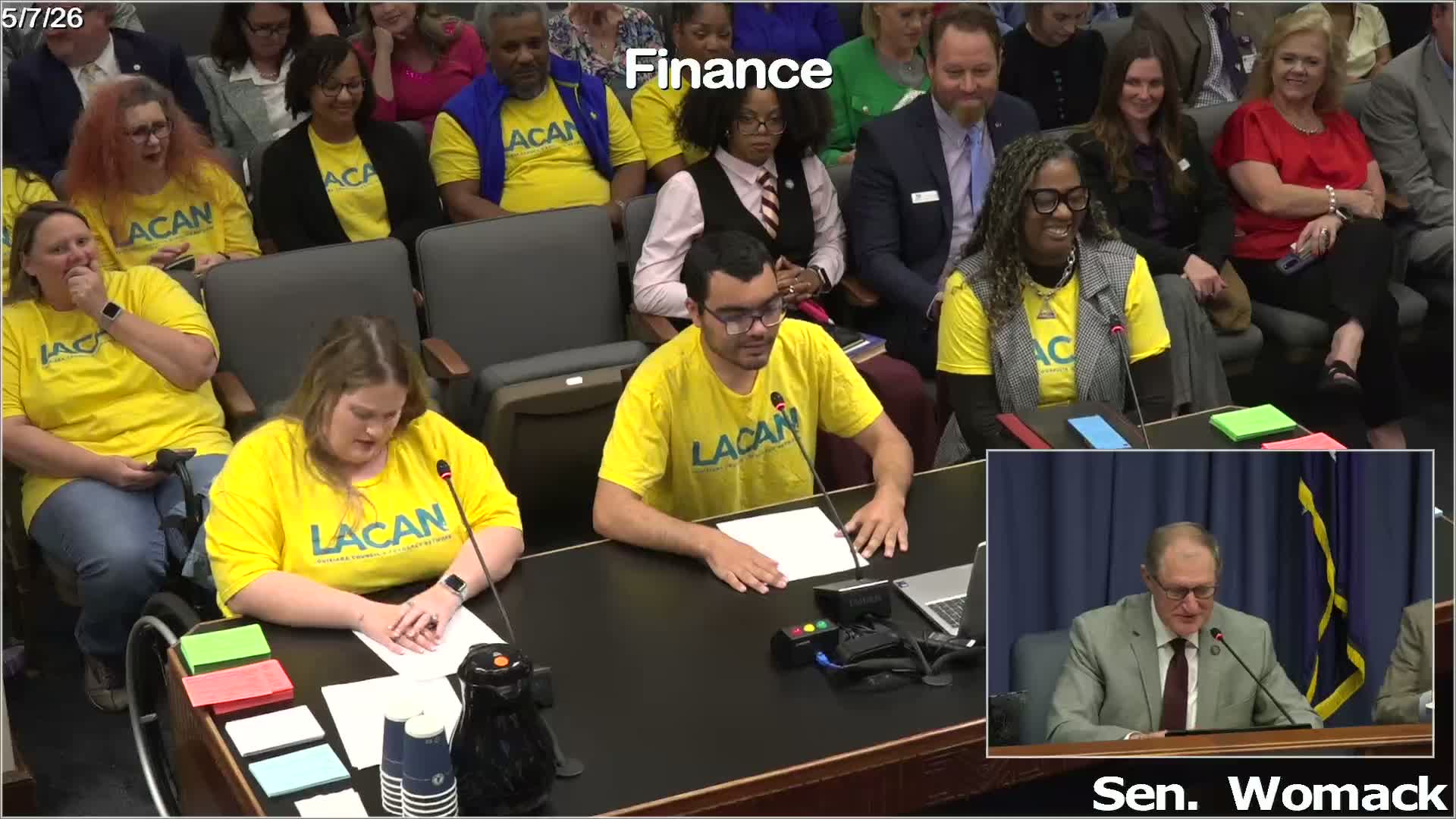
A cascade of providers, parents and people with disabilities urged the Louisiana Senate Finance Committee to increase state funding for Louisiana Rehabilitation Services (LRS) and waiver programs, saying shortfalls are causing delays in services, workforce turnover, and unmet needs across the state.
Madeline Young told the committee she relied on Families Helping Families to navigate special‑education and transition services and thanked the House for prior appropriations, but asked senators to preserve state support so the organization can keep serving families. Drew (Jude) Boynton, a student who used LRS services to attend Nichols State University, said the House added $2,000,000 but asked the Senate to consider an additional $4,800,000 so more students can receive vocational supports and transition help.
Mildred Johnson, a transition coordinator and parent, said that LRS currently lacks capacity to meet demand and urged the committee to allocate $4,800,000 in state general funds to “secure the full $72,000,000 in available federal matching funds.” She described a case in which a student missed critical transition supports after graduation because of funding and staffing delays.
Provider representatives from The Arc, the Community Provider Association of Louisiana and smaller specialized schools described operating deficits, staffing shortages and the results of a Milliman rate study. Kelly Monroe (The Arc) summarized a three‑year rate study that estimated a $53,600,000 increase in state general funds would be needed to bring provider rates to cost; speakers said that figure may be difficult to meet immediately and proposed phased options. Arcs and smaller rural providers reported negative operating balances, unfilled shifts and wait lists for waiver services.
Myron Wright — who identified himself as a college professor, parish school board member and a quadriplegic reliant on direct support workers — described losing long‑tenured staff to higher pay elsewhere and said turnover jeopardizes clients’ safety and independence. ‘‘Without dependable direct support workers, my ability to teach, to serve, to lead and to engage my community will come to a halt,’’ he said.
Providers urged the committee to consider rate increases and other measures to improve direct‑support wages and to invest state funds that would unlock federal matching dollars. Committee members acknowledged the requests and said staff would compile the testimony with budget documents and options for prioritizing limited dollars.
The committee did not take a vote on any proposal during the hearing; funding decisions will be resolved in subsequent budget negotiations.