Get Full Government Meeting Transcripts, Videos, & Alerts Forever!
Get email alerts on the Project Budget Utilities topic
No spam. Unsubscribe anytime.
Utility estimate jumps to about $2.2 million; committee approves invoices and utility work
Summary
The School Building Committee heard that utility costs for the North Attleborough school project rose from an $800,000 allowance to roughly $2.2 million—driven largely by replacement of aged feeder cables—and voted to approve invoice payments and the utility estimates so work can proceed.
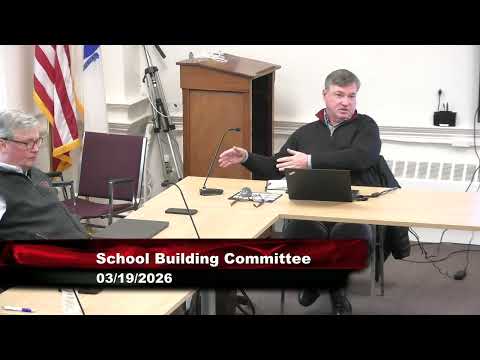
The School Building Committee reviewed updated utility cost estimates for the district’s school construction project and approved related invoice and utility payments at its meeting.
Committee members were told the project’s original budget allowance for utilities was about $800,000, but the current estimate is “about 2.2 million,” an increase of roughly $1.4 million, driven largely by the need to replace aged feeder cables on the transmission feed near Landry. “The other small part … is a temporary feed coming off Landry for the stadium,” the presenter said, and the cost for the cable replacement was cited as $720,000.
The presenter also said the district had received three reimbursements on the 5th totaling $875,542 and that one reimbursement (number 18) was awaiting signature.
Committee members asked who is responsible for the line work. Brad asked whether the town or the project was responsible for the street-to-building line; the presenter and others said the cables are town-owned and aging, and that North Attleborough Electric provided a detailed estimate and intends to bill the district for actual costs rather than require up-front payment. “Unlike Liberty Gas, which requires payment before they’ll do anything, North Attleborough Electric provided a very detailed estimate … and they’re only going to … at the end be what their costs are,” the presenter said.
Committee members discussed contingency planning and how the team will “true up” the budget once the 60% estimates return. The presenter described the typical design-and-pricing contingency process—an initial contingency (commonly around 15%) that decreases as the design matures—and said this electrical work was larger than typical contingencies, so the team will identify sources to transfer funds as needed.
On motions before the committee, members voted to approve the prior meeting minutes (with one abstention because a member was not present at the prior meeting), approved the interim invoice package that included the Liberty Gas relocation fee, and approved the utility estimates as presented so the work can proceed.
The committee did not set a dollar-for-dollar reallocation in the meeting; members said the next meeting will present more definitive reconciliation from the 60% cost estimates so the committee can determine how to offset any gap in the overall project budget.
The project team and committee emphasized minimizing impacts to active school operations while the work proceeds and coordinating schedules to limit disruption to athletics and campus use.