Get Full Government Meeting Transcripts, Videos, & Alerts Forever!
Get email alerts on the Budget topic
No spam. Unsubscribe anytime.
Franklin City manager presents structurally balanced FY2026 budget, flags $5.88 million shortfall and proposed tax changes
Summary
The city manager told a town-hall audience the FY2026 proposal closes a roughly $5.88 million shortfall, uses one-time revenues for one-time expenses, allocates $368,500 for capital outlay and proposes realigning fees and a change to the real-estate tax; council members and residents pressed questions about the scale of the increase and program impacts.
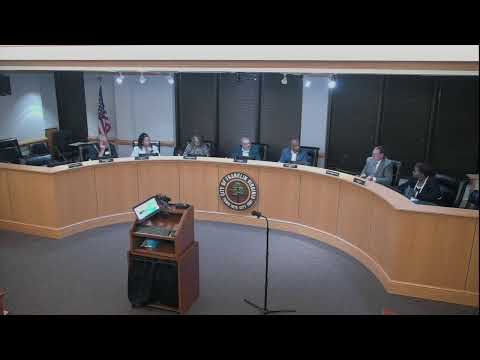
The Franklin City manager presented the proposed FY2026 operating and capital budgets at a council-hosted town hall, saying the proposal is “structurally balanced” after work to close a projected shortfall of about $5.88 million.
The manager said the budget team used one‑time revenues for one‑time expenditures and recurring revenues for recurring costs, and that the general‑fund proposal represents a substantial year‑over‑year increase driven in part by pass‑through grants and service demands. She told the chamber the FY26 general fund was presented as roughly $35.4 million and that $368,500 is proposed for capital outlay.
“As the guidance statements proclaim, the city of Franklin ensures its residents and visitors health, safety, and welfare by offering efficient, affordable quality service,” the manager said in opening remarks. She described the overarching budget theme as “recalibrate,” asking departments to realign fees, rates and spending to match city priorities.
Key budget items cited in the presentation included: - A projected budget shortfall of about $5.88 million addressed through proposed revenue adjustments and departmental changes. - Proposed adjustments to taxes, fees and service rates; the presentation described an increase to the real-estate tax “from three to seven” in the manager’s phrasing and a separate note that the council is considering a larger real-estate tax step than some earlier incremental proposals. Councilmembers later framed that change to residents as an increase represented in some comments as a four‑cent jump (e.g., comments referencing $13 to $17 in taxpayer-facing examples). - Electricity and utility rate proposals tied to Dominion Power’s announced 5% wholesale increase and suggested rate realignments for commercial and large industrial customers; the presentation also mentioned an illustrative residential base‑charge adjustment. - Support for Franklin Public Schools via an announced local appropriation request and $353,946 allocated for education‑related debt service. The manager noted the FY26 budget anticipates a local share request of roughly $4.87 million to meet required local effort and match for state funding. - No new general‑fund capital projects were proposed; the budget preserves funding for multi‑year and ongoing projects such as gymnasium and court updates, waterline rehabilitation, sewer improvements and electric substation work. Airport projects were highlighted as largely funded by state and federal sources (the presentation said roughly 98% of airport project funding comes from state/federal sources, with local share around 1–2%).
Council members and residents used the town‑hall Q&A to press for more detail on tax increases and service impacts. Councilmember Jessica Grant Banks said the city manager has done “a phenomenal job” preparing the budget but acknowledged residents’ concerns about the size of the proposed jump in real‑estate tax rates. Multiple residents said increases will be felt on fixed incomes and urged gradual adjustments instead of a large single increase.
City staff said more detailed budget documents and public hearings are part of the formal adoption process; those materials will include line‑item details, capital project lists and the schedule for public hearings and adoption. The council is expected to continue budget deliberations in public hearings and a formal vote later in the adoption schedule.
What’s next: the manager invited the public to review the full budget book for itemized line items and cited upcoming public‑hearing dates. Councilmembers said they expect further budget discussion at scheduled meetings before final adoption.