Get Full Government Meeting Transcripts, Videos, & Alerts Forever!
Get email alerts on the Immigration Enforcement Local Response topic
No spam. Unsubscribe anytime.
Attorneys, advocates tell Planefield residents how to prepare as ICE enforcement rises
Summary
At a Planefield community forum, immigration attorneys and local advocates outlined recent federal policy and court changes that limit bond eligibility, urged families to prepare identity and caregiving documents, and urged the city to expand bilingual know‑your‑rights trainings and institutional policies to protect patrons.
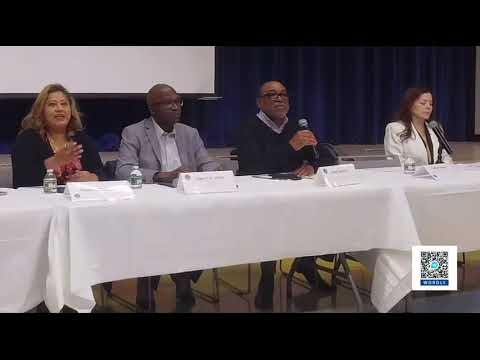
A community forum in Planefield, N.J., drew city officials, immigration attorneys and advocates on the evening of the event to provide practical guidance about recent changes in federal immigration enforcement and courtroom practice and to advise residents what to do if approached by immigration agents.
Attorney Ingred Chavaria, an immigration and family‑law lawyer who has practiced for two decades, told the audience: “Just because ICE makes an arrest that does not necessarily mean that the individual will be automatically deported.” She advised families to compile passports, birth certificates, school records, tax returns and letters of support in an accessible folder and to make sure at least two people know where those documents are kept.
Why it matters: Panelists said federal policy shifts and court rulings are making it harder for detained immigrants to obtain release on bond and to present their cases in immigration court. "There has been a push to increase budget in immigration enforcement," attorney Brian Mozano said, and the panel described expanded detention capacity and a narrowing of bond access. Panelists said judges are increasingly ordering bond amounts that many families cannot afford; Chavaria cited bond orders now commonly in the $15,000–$20,000 range.
Panelists and city leaders urged institutions to adopt practical, lawful steps to protect patrons and to signal rights awareness. During an audience question about library safety, speakers pointed to a recently passed state measure the forum referred to as the "safe communities act," which tasks the state attorney general with issuing model policies for public‑space interactions with ICE. Panelists recommended that libraries and other public buildings consider equitable entry policies (for example, locked doors with staff screening), clear signage about patron rules and routine trainings for staff and community members.
Residents described frequent enforcement activity in Planefield and asked how to identify officers. The panel advised documenting incidents, asking officers (from a safe distance) for agency and badge information, and uploading reports to the state’s reporting portals and rapid‑response hotlines. A police representative at the forum said that when vehicles are left running or abandoned after a member of a household is detained, officers will run the plate, attempt to contact the owner and give the family a chance to retrieve the car before the vehicle is towed.
Legal context and remedies: Attorneys on the panel urged people to consult counsel early and not to rely on single‑source advice from form preparers. They described litigation strategies, including challenges in federal district court, as one route to contest detention and seek relief when immigration court bond authority is constrained. Chavaria and others warned that some agreements and rulings now limit asylum intake and available defenses for applicants who entered after certain dates; panelists encouraged opposing judge determinations and pursuing appeals when appropriate.
Claims and community response: Several attendees said ICE has increased presence in neighborhoods and at businesses and schools; that claim was disputed in part by some comments from city officials, but panelists urged documentation and community rapid‑response coordination. Advocates urged the city to go beyond state model policies by publicizing bilingual, vetted know‑your‑rights materials, running legal clinics, and establishing funds to assist families affected by detention.
The forum closed with panelists and officials committing to continued collaboration; organizers set tables with bilingual materials and offered follow‑up contacts for legal help and trainings. The mayor and council members present encouraged residents to contact city staff and the business administrator to coordinate future community sessions and trainings.