Get Full Government Meeting Transcripts, Videos, & Alerts Forever!
Get email alerts on the Public Safety topic
No spam. Unsubscribe anytime.
Dispatcher describes Westcom 911’s governance, redundant systems and life‑saving pre‑arrival protocols
Summary
A Westcom dispatcher outlined how the consolidated 911 center formed, its multi‑city governance and redundant technology, and stressed that scripted pre‑arrival instructions and caller location details have directly contributed to lives saved.
A Westcom dispatcher described on record how the regional emergency communications center was created through intergovernmental cooperation and built redundancy into its systems to keep emergency services running.
The dispatcher said Westcom was formed around 2000–2001 through an agreement among nearby cities to consolidate separate communication centers and improve efficiency. "All Westcom staff are employees of the city of West Des Moines," the dispatcher said, and city managers and public‑safety chiefs share governance responsibilities that guide operations and purchasing decisions.
Why it matters: The dispatcher told listeners that the governance model—city managers on a management committee and chiefs on an operations committee—lets the participating cities shape how the center works because "they're paying for it." That structure, combined with split data centers and redundant circuits, is intended to keep computer‑aided dispatch and radio systems available even during failures.
The dispatcher also described how Westcom’s radio and CAD architecture served as a foundation for a wider statewide radio system. "Our CAD systems are hosted in two environments. So if something happens here, we have it in a remote data center somewhere else," the dispatcher said, adding that the center’s radio system has grown into the state’s backbone.
On the front line of calls, the dispatcher emphasized the operational reason for scripted questions and pre‑arrival instructions. "Something I wish people knew when they called 911 is when we ask you questions, it's not to delay your help. It's truly so we can have the best knowledge to let our responders know exactly what they're looking for," the dispatcher said. The dispatcher urged callers to know their address because automated location from mobile phones can be imperfect: "The most important thing is for you to know the address, and that's how I get people to help you."
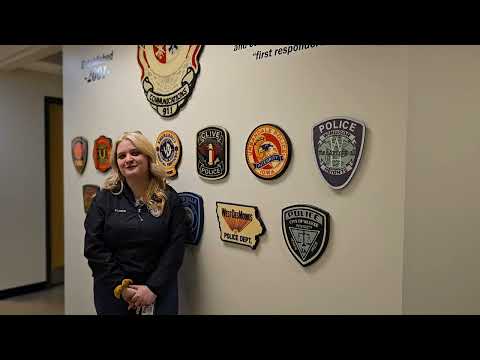
The dispatcher pointed to multiple documented cases in which telephone coaching—CPR instruction, airway management and naloxone guidance—contributed to survivals. "Those pre‑arrival instructions and the names on that wall are directly attributable to dispatcher action and saving someone's life," the dispatcher said.
The account provides a window into both the organizational choices that shape a consolidated regional 911 center and the operational priorities—redundancy, governance and caller guidance—that staff say support life‑saving work.