Get Full Government Meeting Transcripts, Videos, & Alerts Forever!
Get email alerts on the Foreign Policy topic
No spam. Unsubscribe anytime.
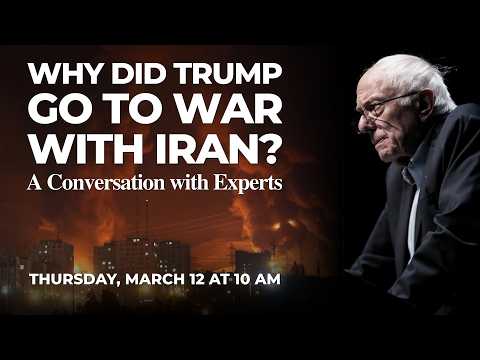
Experts warn U.S. strikes on Iran risk wider regional war and heavy civilian toll
Summary
Three Iran specialists told a moderated panel that recent U.S. strikes — coordinated with Israeli actions in panelists’ account — risk broader regional escalation, have inflicted significant civilian and cultural damage, and undercut prospects for democratic change inside Iran.
A moderated panel of Iran specialists said recent U.S. strikes on Iran risk escalating into a broader regional conflict and have already exacted heavy civilian and cultural costs.
The panel, convened by a Senate committee moderator and featuring Trita Parsey (executive vice president, Quincy Institute for Responsible Statecraft; founder, National Iranian American Council), Nagab Muravi (journalist and political analyst; senior fellow, Center for International Policy), and Cena Tusi (senior research analyst, Center for International Policy), traced the current crisis to decades of contested history and criticized official justifications for military action.
Panelists put the present violence in historical context, pointing to the 1953 overthrow of Iran’s prime minister as a foundational grievance. "For Iranians this all at least ... goes back to 1953," Trita Parsey said, arguing the coup and subsequent interventions helped fuel the 1979 revolution and persistent anti‑American sentiment. They cautioned that simplifying Iran as a monolithic authoritarian state erases active civil society movements, including women’s rights and independent labor organizing.
Speakers challenged the administration’s public rationales for strikes, saying messaging has shifted and has not made a convincing case of an "imminent threat." Nagab Muravi said officials have offered "many different justifications" and that the shifting narrative has undermined credibility. Panelists told the audience that alternatives to immediate military action remained under‑explored.
The panel highlighted the human cost. Panelists reported widespread evacuation inside Iran, civilians sheltering in hallways, and mounting casualties. "People are absolutely terrified," Muravi said. Panelists discussed a strike on an elementary school in a southern city identified in the transcript as Mino, saying initial reports put the number of children killed at about 175 and describing a follow‑up strike that hit relatives and rescuers.
They also described damage to hospitals, oil refineries and cultural sites — including palaces and mosques in Isfahan (transcript spelling Esvahan) — and warned of environmental effects such as smoke and acid rain after refinery strikes. Human Rights Watch, panelists noted, has said the school strike should be investigated as a potential war crime.
On the regional strategic balance, panelists argued Israel aims to blunt Iranian capabilities and that U.S. alignment with Israeli objectives (including the decision to leave the Iran nuclear agreement during the Trump administration) contributed to escalation. "For the Israelis it’s about domination of the region," Parsey said; panelists warned the fighting has already displaced hundreds of thousands in Lebanon and disrupted Gulf shipping routes.
Panelists also warned of wider geopolitical costs: sharper pressure on global markets, redeployment of U.S. missile batteries, targeted strikes on regional infrastructure and the possibility of stepped‑up Iranian retaliation intended to create deterrence. "If we don't establish enough deterrence," Muravi said, "they will escalate to stop recurring attacks." They stressed that the conflict could reduce political space inside Iran by empowering security services (including the IRGC, referenced in the transcript) and thereby set back domestic democratic movements.
Panelists criticized U.S. media coverage as uneven and at times dehumanizing, and urged more sustained reporting on civilian impacts inside Iran. They also raised legal and constitutional concerns about unilateral military action without clear congressional authorization and warned that such precedents could erode international norms.
The panel concluded with a call for greater public scrutiny of policy choices and deeper debate over alternatives to sustained military escalation. The session ended after closing remarks and thanks from the moderator.
Sources: Remarks and exchanges among the moderator, Trita Parsey, Nagab Muravi and Cena Tusi during the moderated panel (transcript).